
Copp’s Hill Burying Ground: Where British Soldiers Used Gravestones for Target Practice
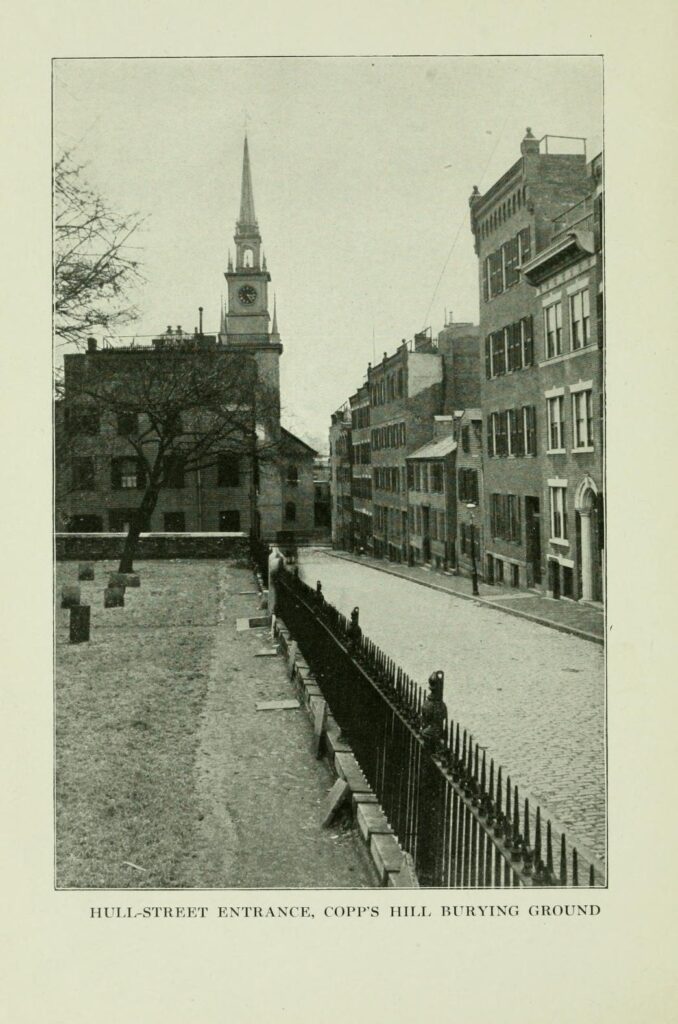
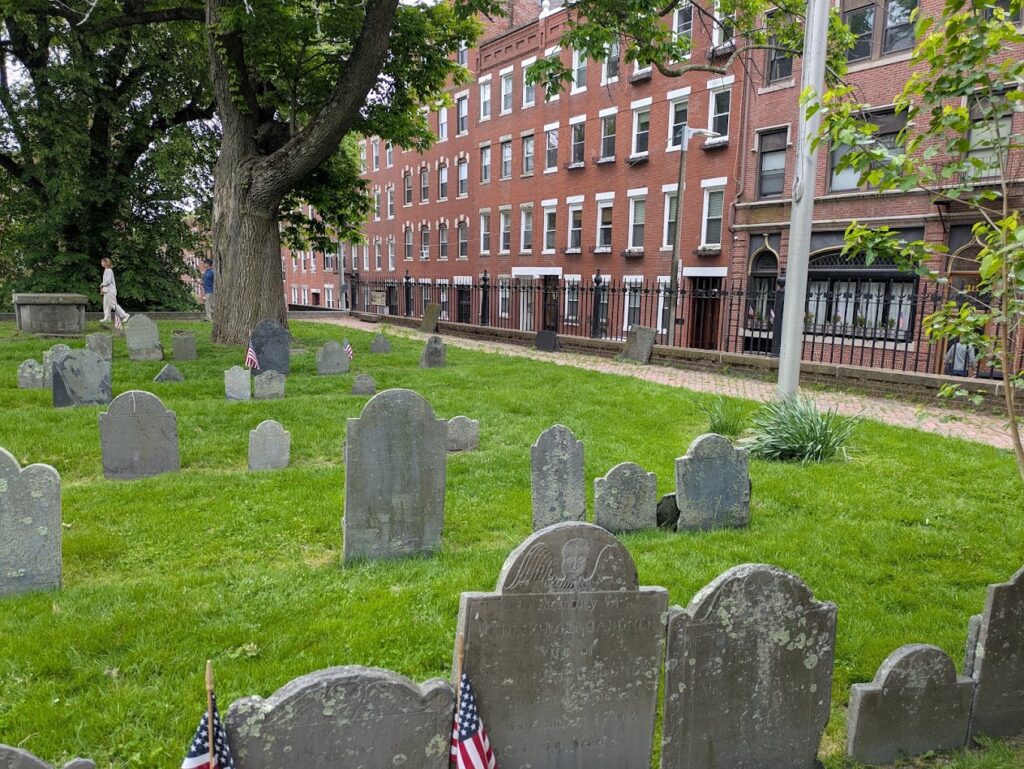
A hillside cemetery tucked into just two acres of Boston’s North End holds the remains of more than 10,000 people. Established in 1660, Copp’s Hill Burying Ground once served as a military vantage point, and much later survived decades of neglect to become one of Boston’s most visited historic sites.
Copp’s Hill Burying Ground’s 1659 Founding
The city of Boston bought land from John Baker and Daniel Turell in February 1659 to open its second burying ground. It was originally called North Burying Ground, and later purchases of adjacent land brought it to its current size in the early 1800s.
The name Copp’s Hill comes from William Copp, a shoemaker who owned property nearby on what is now Prince Street. In its earliest decades the ground sat on a rugged, steep bluff overlooking the harbor, a site so inaccessible from the water that burials had to be carried up by hand.
That bluff no longer exists in its original form. Workers cut roughly ten feet off the hill in the early 1800s to help fill in the nearby Mill Pond.
The British Battery That Shelled Charlestown from Copp’s Hill
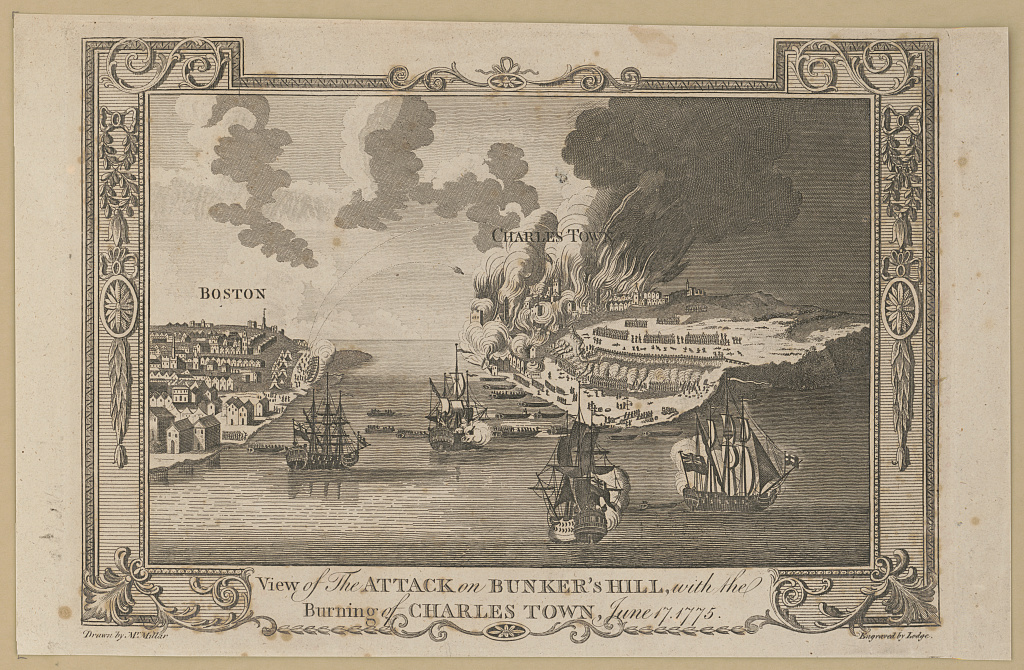
The burying ground’s height and its view across the harbor made it a strategic military location during the Revolution. In 1775, British forces built an earthwork and artillery battery on its southwest side, and from that position shelled Charlestown and Bunker Hill during the fighting of June 17.
An engraving published in London in 1783 shows the scene in dramatic detail, ships in the harbor, smoke rising from Charlestown’s burning rooftops, and troops advancing along the shore, the same bombardment that British gunners on Copp’s Hill took part in from the Boston side.
British troops occupying the area are said to have used the burying ground’s own gravestones for musket target practice in their idle time between engagements.
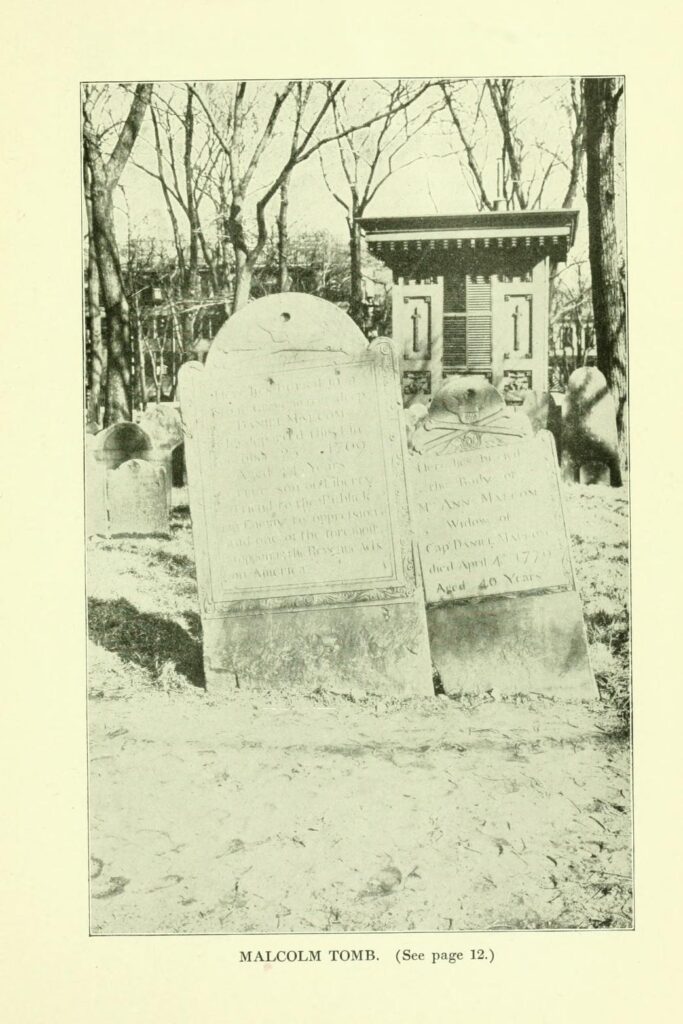
The stone most often cited as evidence is that of Captain Daniel Malcolm, a merchant and known patriot who had died in 1769. His epitaph called him a true son of liberty, an enemy to oppression, and one of the foremost opponents of the Revenue Acts imposed on the colonies, so it’s easy to see why British soldiers might have singled it out.
A round scar near the top of the stone, visible in photographs taken decades later, is widely interpreted as the mark of a musket ball fired at close range.
Who Is Buried at Copp’s Hill: Mather, Newman, and Prince Hall
The burying ground holds a wide cross-section of colonial Boston. The Mather family tomb contains the remains of Increase and Cotton Mather, Puritan ministers whose influence extended into the Salem witch trials of the 1690s.
Robert Newman, the sexton who hung the two lanterns in Old North Church’s steeple to warn of the British approach on the night of Paul Revere’s ride, is buried here as well, a short walk from the church itself.
A section in the northwest corner was designated specifically for Boston’s Black community, both free and enslaved, and includes the grave of Prince Hall, an abolitionist and founder of the first Black Masonic lodge in America.
From Neglected Cemetery to Freedom Trail Stop
By the middle of the 19th century, the city had reorganized the burying ground’s headstones into straight rows, partly to make the grounds easier to maintain with early lawn mowers, a small but telling sign of how a once-solemn colonial cemetery had become just another piece of municipal upkeep.
Use for new burials had mostly ended by the 1850s, and by 1878 the site was described as badly neglected.
When the Freedom Trail was created in 1951, Copp’s Hill wasn’t even included as an official stop, it was added later, and earned a spot on the National Register of Historic Places in 1974.
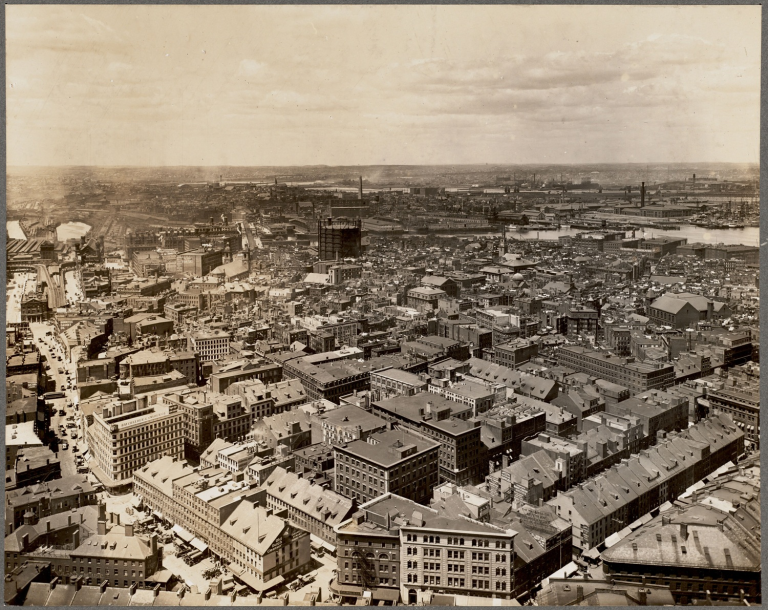
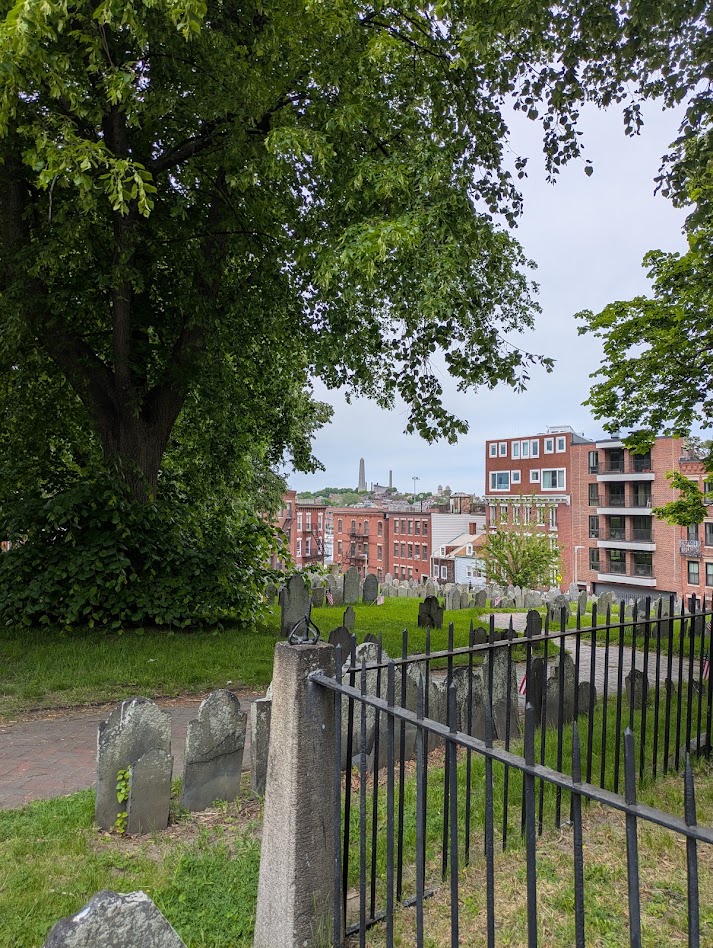
Today it draws a steady stream of visitors and photographers, its gravestones standing in tidy rows within sight of the Bunker Hill Monument across the water, in a North End that has grown up densely around it on every side.
Sources:
- Boston.gov, “Copp’s Hill Burying Ground,” https://www.boston.gov/cemeteries/copps-hill
- American Battlefield Trust, “Copp’s Hill Burying Ground,” https://www.battlefields.org/learn/articles/copps-hill-burying-ground
- Boston National Historical Park (NPS) — https://npplan.com/parks-by-state/massachusetts-national-parks/boston-national-historical-park-park-at-a-glance/boston-national-historical-park-freedom-trail/boston-national-historical-park-cemeteries/boston-national-historical-park-copps-hill-burying-ground/