Horace Tabor made his fortune in silver, and in 1881 he decided Denver needed an opera house worthy of it.
The Tabor Grand opened that year at 16th and Curtis Streets, and opening night newspapers described it afterward as “perfection.”
(more…)“Lost” doesn’t just mean bulldozed. A building can be demolished, transformed beyond recognition, or hiding in plain sight, its history unknown to the people who walk past it every day. Lost Urban Vistas documents those stories across American cities: what we built, what was lost, what survived, and what cities are doing today to reinvent themselves. Read More

Horace Tabor made his fortune in silver, and in 1881 he decided Denver needed an opera house worthy of it.
The Tabor Grand opened that year at 16th and Curtis Streets, and opening night newspapers described it afterward as “perfection.”
(more…)
On the corner of Third Avenue and Third Street in the Gowanus neighborhood of Brooklyn, a small two-story Italianate building sits tucked between the wings of a Whole Foods Market.
Thousands of shoppers pass by it every week, but few realize they are walking past New York City’s oldest known concrete building, a structure that pioneered a construction technology that would reshape the world.
(more…)
The southeast corner of Fourth and Vine Streets in downtown Cincinnati has held something significant for most of its history.
(more…)

By the 1880s, Denver’s 17th Street had established itself as the financial center of the region, earning it the nickname of the Wall Street of the Rockies.
Major banking institutions, brokerage firms, and law firms lined the corridor, and the multi-story commercial buildings that housed them gave the street a dense, canyon-like character that was deliberately reminiscent of lower Manhattan.
(more…)
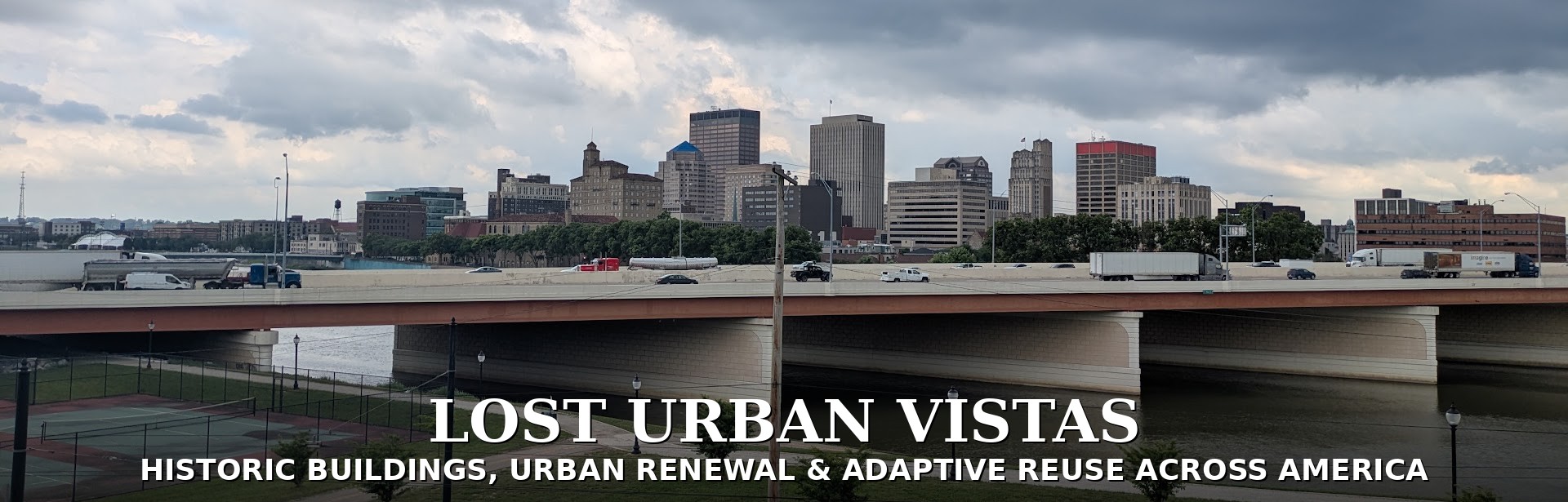
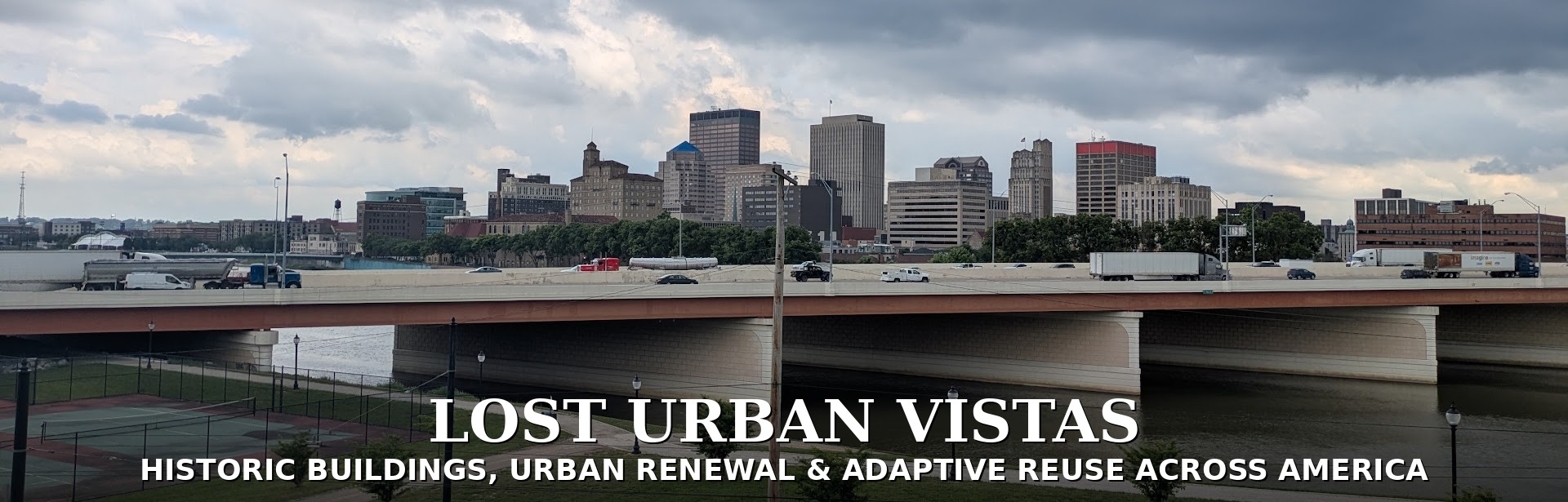
For one of the first articles here on Lost Urban Vistas, I wanted to explain what I chose for the header photograph and how it relates to my goals for this site.
The building at the center of the photo is America’s Packard Museum, located at the southern edge of downtown Dayton, Ohio.
It’s a good place to start exploring what Lost Urban Vistas is about.
(more…)
For the past several years, I’ve been running Dayton Vistas, a website and social media project dedicated to the history, architecture, and urban redevelopment stories of Dayton, Ohio.
That started as a way to share my research from my book Lost Dayton, Ohio, but it grew into a deeper look into the city and its buildings through short and longform videos, a podcast, and more.
Along the way, people would reach out and ask: do you do this for other cities?
My answer was always “not yet.” But the question stayed with me.
(more…)