The Finest Hotel in the West: Cincinnati’s Lost Sinton Hotel
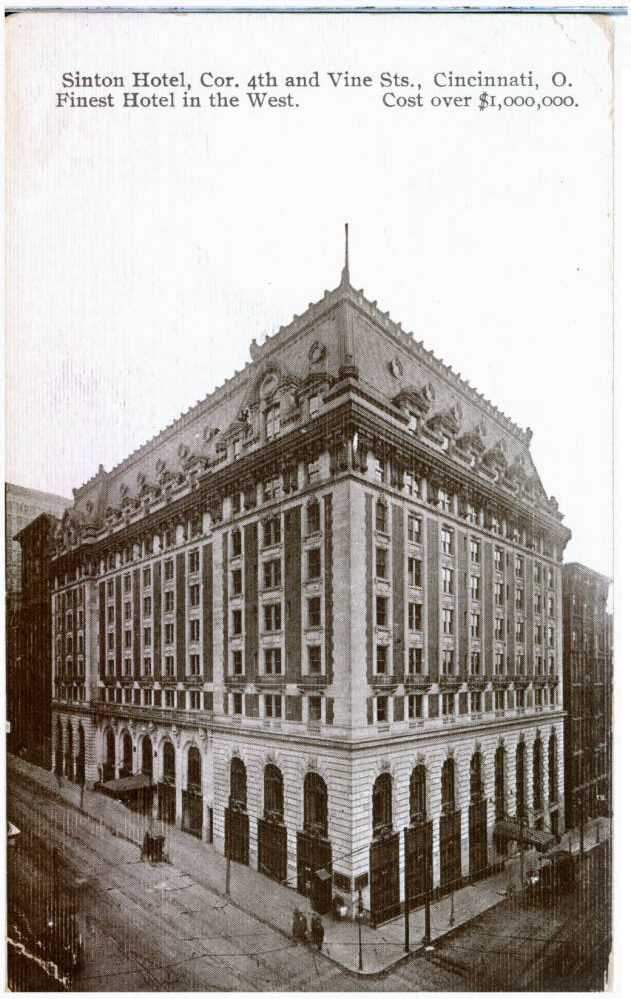
The southeast corner of Fourth and Vine Streets in Downtown Cincinnati has featured something significant for most of its history.
In 1859, Samuel Pike built one of the country’s most ambitious opera houses there, but it burned down in 1866. He rebuilt it, even grander than before, but it burned again.
As of the early 1900s, the corner sat vacant while legal disputes over the property dragged on, until a group of prominent Cincinnatians, with Anna Sinton Taft as the chief financial backer, resolved to build a hotel worthy of the city’s ambitions.
A Grand Hotel Opens
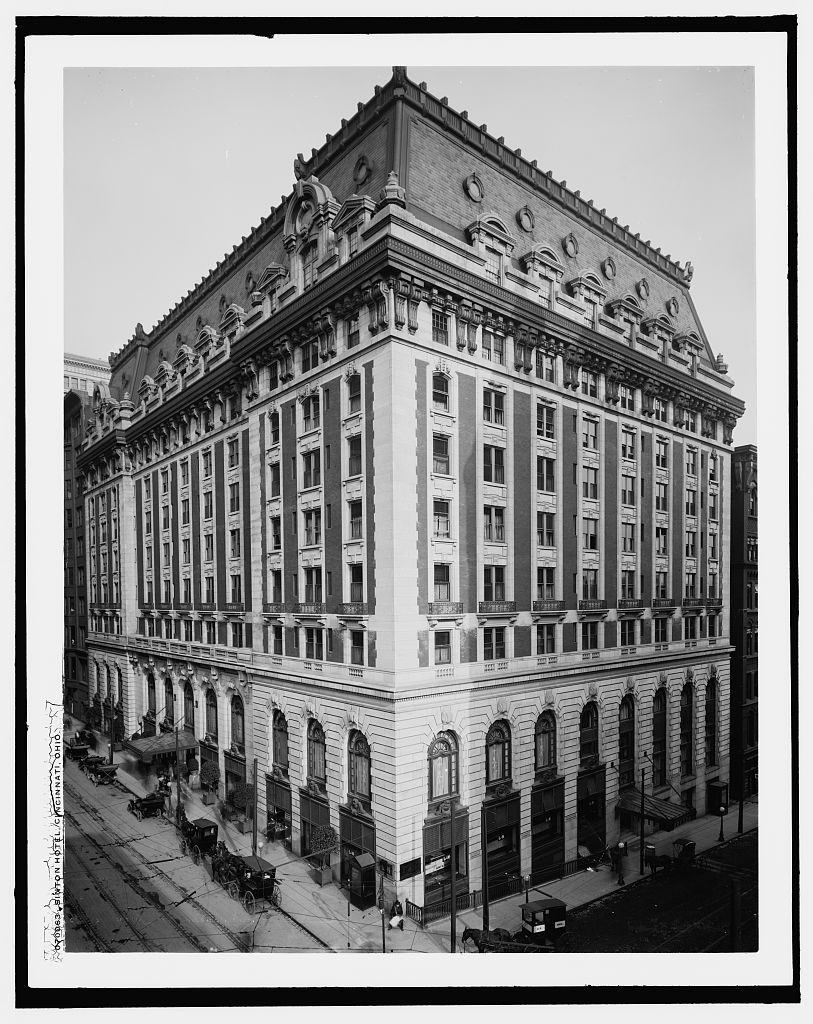
The Sinton Hotel opened on February 26, 1907.
It was designed by architect Frank Mills Andrews, who opened an office in Cincinnati in 1905 after completing the Dayton Arcade and National Cash Register factory buildings up north in Dayton. (He also designed the Kentucky State Capitol two years after the Sinton in 1909.)
The hotel is a great example of the French Second Empire style, with a reinforced concrete skeleton that was considered modern for its time. The Sinton was billed as the “Finest Hotel in the West.”
The hotel originally had 400 rooms; additions in 1911 and afterward brought the total to 750. Its public spaces were celebrated at opening: the grand cafe featured rare marbles and Rookwood pottery panels beneath a dome rising 55 feet above the marble floor. Over 2,500 people toured the hotel on its first day.
The hotel took its name from David Sinton, an Irish-born Cincinnati industrialist described by the Cincinnati Enquirer in 1885 as “the wealthiest man in the Ohio Valley,” who had built his fortune through iron manufacturing and real estate.
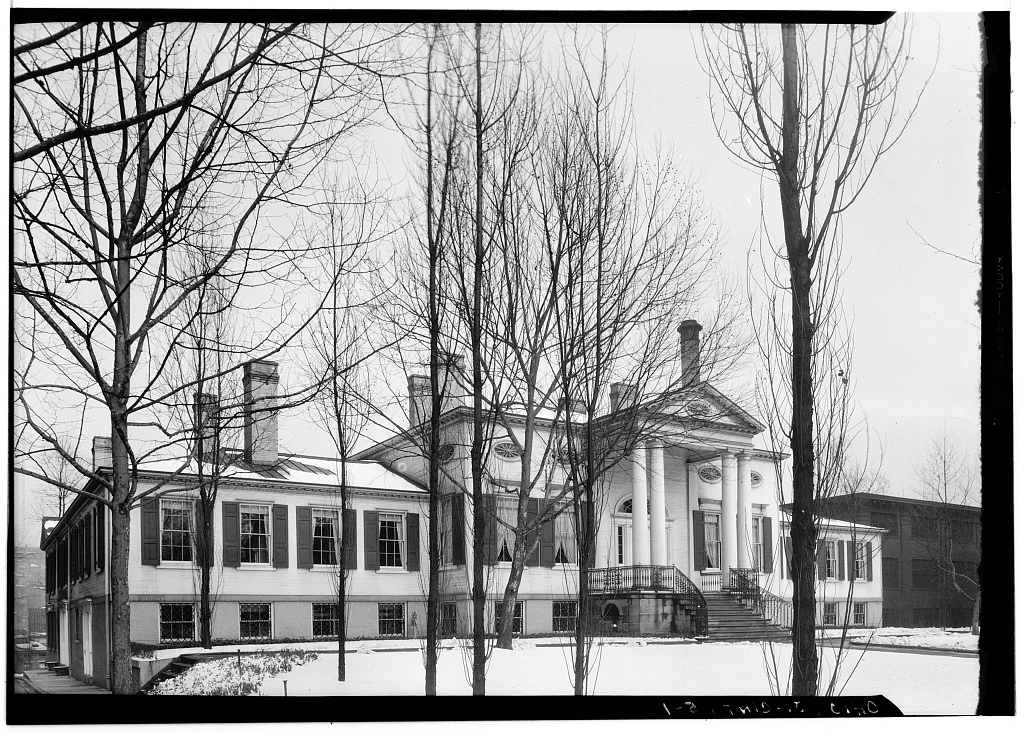
His daughter Anna had married Charles Phelps Taft, brother of President William Howard Taft, and the family’s Pike Street mansion, which David Sinton had purchased in 1871, still stands today as the Taft Museum of Art, one of Cincinnati’s most significant cultural institutions.
The Black Sox Scandal and the Sinton
In 1919, the Sinton Hotel entered American sports history. The Cincinnati Reds won the World Series that year against the Chicago White Sox in what became known as the Black Sox scandal: eight White Sox players had allegedly agreed to throw the series in exchange for payment from gamblers.
The Sinton Hotel was where it came together. On the morning of September 30, 1919, the eve of Game 1, a meeting took place in a room at the hotel between several players and gamblers to finalize the arrangement. During the 1921 Black Sox Trial, gambler William “Sleepy” Bill Burns testified under oath that he met with players including Chick Gandil, Lefty Williams, Happy Felsch, Eddie Cicotte, and Buck Weaver at the Sinton, and that he informed them he had the $100,000 required to finance the fix.
What exactly was agreed to in that room, and how committed each player actually was, has been debated by historians ever since, most notably in the case of Buck Weaver, who batted .324 in the series with zero errors and maintained until his death that he never participated in the fix despite being present at the meeting. He was banned for life anyway, for having what Commissioner Kenesaw Mountain Landis called “guilty knowledge.”
The End of the Sinton Hotel
The hotel operated for more than five decades after that, becoming part of the Sheraton chain in 1953. But by the early 1960s it had accumulated financial difficulties and outstanding property taxes, and it closed.
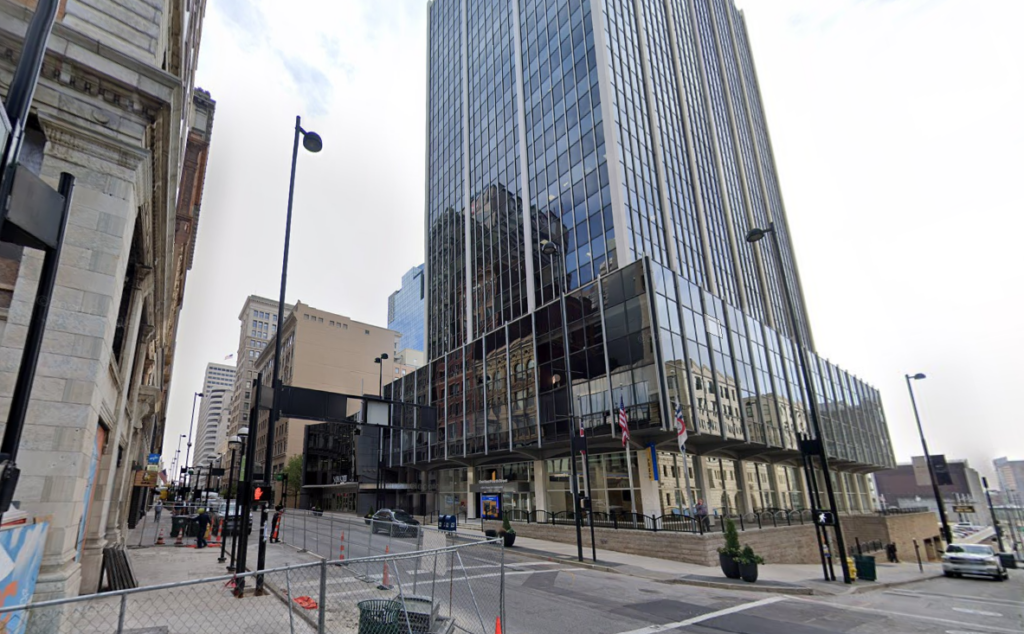
It was demolished around 1965 and the Provident Bank Tower went up on the site in 1968.
The modern tower with glass curtain wall at least still holds the street wall at the corner, but offers no hint of the opera house and grand hotel that once stood there.
Sources:
- “History of the SE Corner of Fourth and Vine,” Digging Cincinnati History, https://www.diggingcincinnati.com/2013/08/history-of-se-corner-of-fourth-and-vine.html
- Cincinnati Refined, “Cincy Through the Decades,” https://cincinnatirefined.com/travel/cincinnati-through-the-decades-150-years-of-building-in-the-urban-core
- Restaurant Ware Collectors Network, Sinton Hotel entry, https://rwcn-idwiki-2.restaurantwarecollectors.com/content/sinton-hotel-3-2/
- The Unknown Architect: Frank Mills Andrews, https://calvarycemeterydayton.org/news/the-unknown-architect/