Last Building Standing: A Lost Automotive District and the Museum That Preserved It
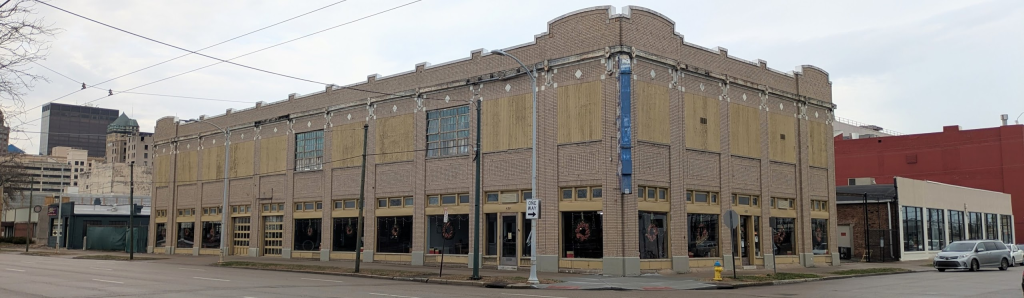
For one of the first articles here on Lost Urban Vistas, I wanted to talk about a photo I took here in Dayton, Ohio, and how it relates to my goals for this site.
The building at the center of the photo is America’s Packard Museum, located at the southern edge of downtown Dayton, Ohio.
It’s a good place to start exploring what Lost Urban Vistas is about.
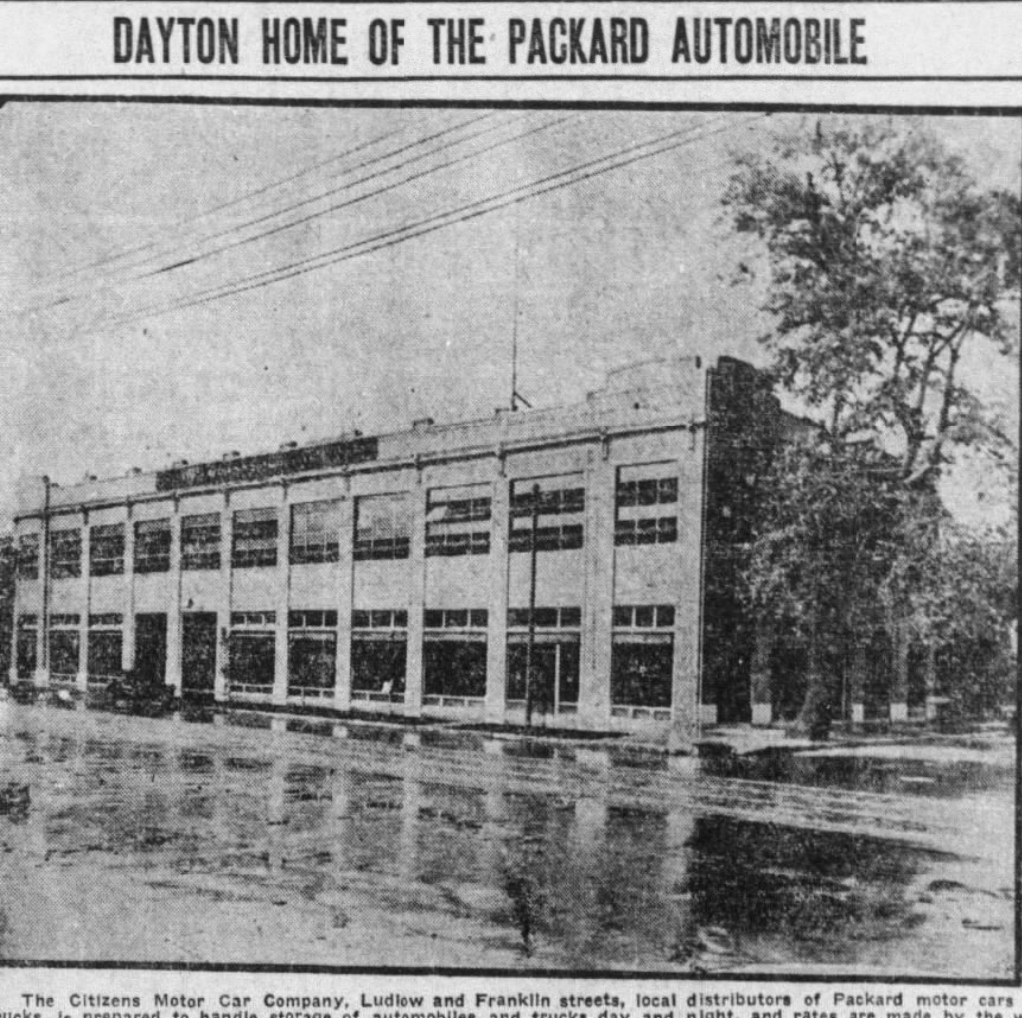
The building was purpose-built in 1917 for the Citizens Motor Car Company, a Packard distributor and service facility designed by local architect Albert Pretzinger in the tradition of Albert Kahn, the German-born architect who had designed Packard’s factory in Detroit.
Its concrete and steel frame, large windows, and freight elevator were built for the business of selling and servicing automobiles, and that is what the structure has remained, in one form or another, ever since.
Over the years its name shifted frequently and it was used as a body shop, parts warehouse, and more, before its final business Genuine Auto Parts vacated the space in 1986.
In 1992, local attorney and Packard collector Robert Signom purchased the property and established a nonprofit museum, preserving not just the cars inside but elements like the original floor tiles, showroom fixtures, and the general manager’s office radio.
Today it houses the largest public collection of vintage Packard automobiles in the world.
It is also, in the immediate area around it, nearly the last building of its era left standing.
The blocks surrounding the museum tell a story of almost complete transformation. This was once a dense industrial corridor close to Dayton’s Union Station: machine shops, warehouses, light manufacturing, a steam plant that served downtown’s factories and heated its buildings.
Industrial facilities that hummed with the type of activity that stitched together the economic fabric of a mid-sized American city.
Most of it is gone today.
The Longworth Steam Plant, a 13-story Gothic castle of a building that once announced itself to arriving train passengers in red neon letters spelling out D-A-Y-T-O-N, was demolished in 2005.
I personally watched in sadness as a 1920s cold storage complex, which still operated in the same industry nearly a century later, came down at the end of 2025.
And several other auto dealerships that once lined downtown streets during the industry’s early decades have long since been cleared.
The Packard Museum building endures as a rare reminder of what the surrounding area once looked like. It wasn’t always considered “significant,” but it remained useful, and then someone recognized what it was and found a way to preserve both its brick and mortar and its stories.
The museum is a popular draw for Packard fans but too many people in Dayton are still unaware of where it is and how it came to be.
I also like the contemporary image for what else it shows.
Look past the building and you can see distinct eras of the city: a few worn facades that have outlasted most of their neighbors; the tower of the Centre City Building, an early office tower. And beyond it, the clean, glassy modern profile of the Stratacache (Kettering) Tower, the tallest building in Dayton representing a time that cleared so much of what once surrounded it.
The photograph captures, in a single frame, the layered quality that makes urban landscapes worth looking at carefully, multiple eras of a city existing side by side. Finding that kind of history, hiding in plain sight, is what this site is about.
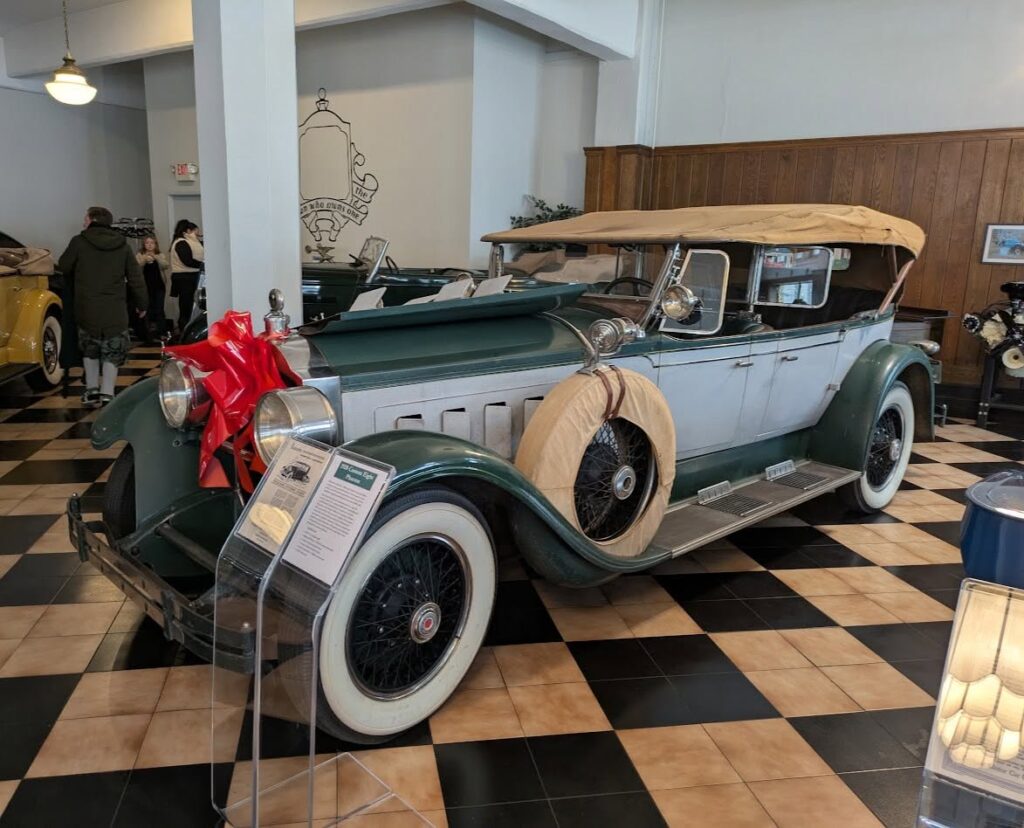
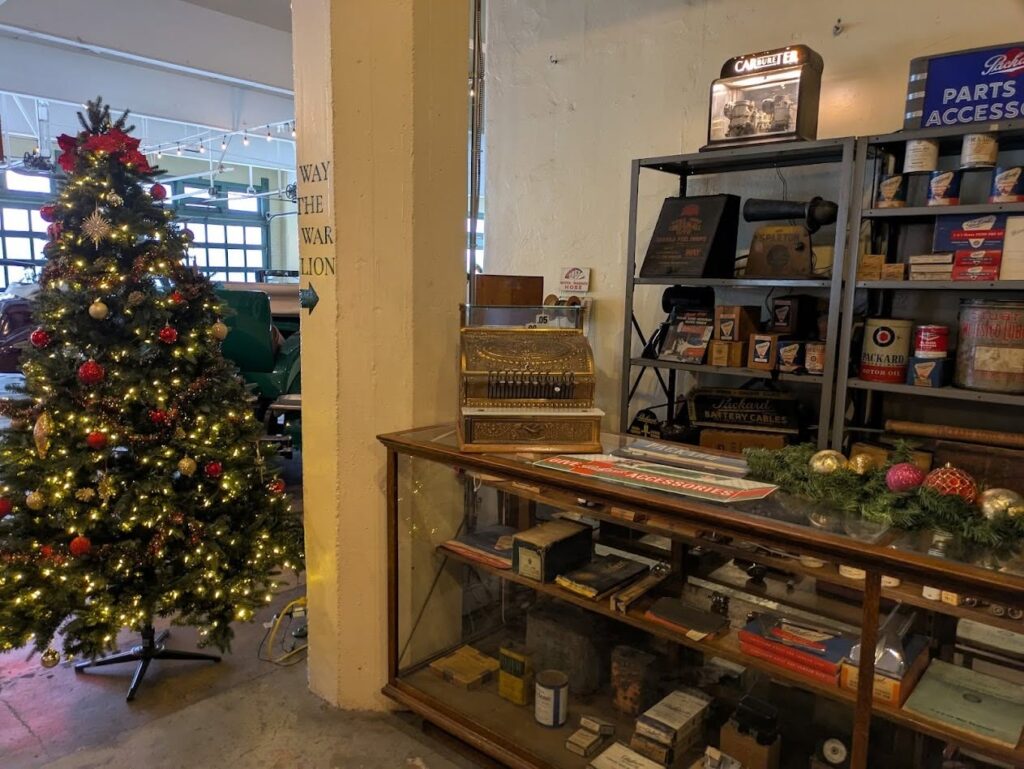
Packard Museum interior. Photos: Andrew Walsh
Sources:
America’s Packard Museum, “History of the Buildings and the Citizens Motor Car Company”
https://www.americaspackardmuseum.org/automotive-history-museum-building