
New York City’s Oldest Concrete Building: The Coignet Stone Company and Its Unlikely Survival in Brooklyn
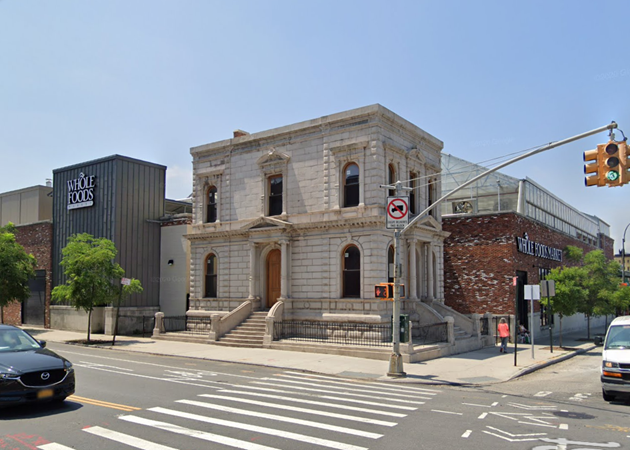
On the corner of Third Avenue and Third Street in the Gowanus neighborhood of Brooklyn, a small two-story Italianate building sits tucked between the wings of a Whole Foods Market.
Thousands of shoppers pass by it every week, but few realize they are walking past New York City’s oldest known concrete building, a structure that pioneered a construction technology that would reshape the world.
And it has somehow survived 150 years which have included neglect, bad decisions, and development pressure to reach the present day largely intact.
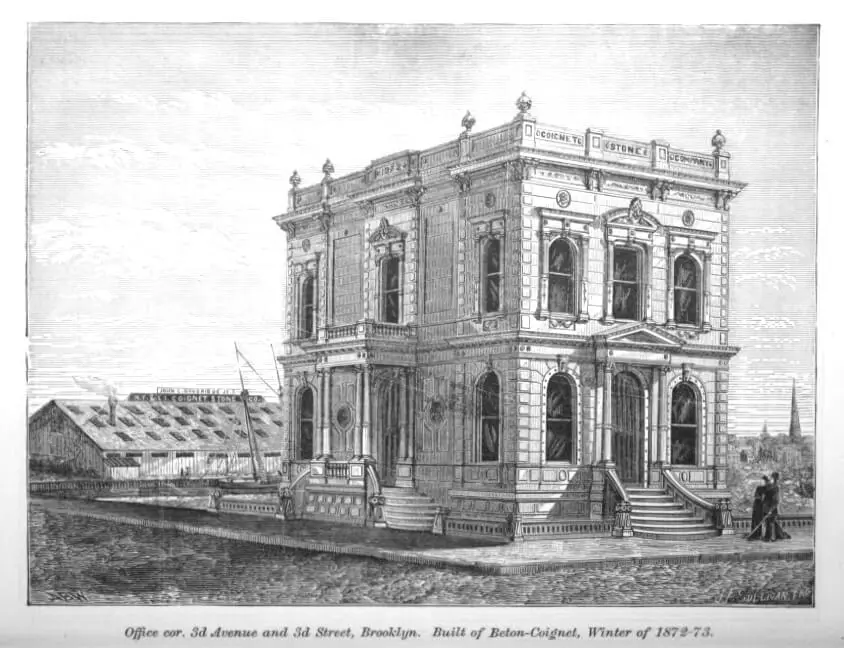
The building was constructed in 1872 and 1873 as the headquarters and showroom of the New York and Long Island Coignet Stone Company, the first American firm to manufacture a type of concrete patented by French engineer François Coignet in the 1850s. (NYC Landmarks Preservation Commission, Designation Report, 2006)
The process, called Béton Coignet, used molds filled with cement rather than chisels and cutting tools, producing building components at a fraction of the cost of carved natural stone.
The company built the showroom out of its own product, using the building itself as a demonstration of what the material could do. The result was an Italianate structure with Ionic-columned porticos, decorative urns, and elaborate window surrounds, a deliberate architectural mish-mash designed to show the concrete’s versatility. (Untapped New York; NYC LPC Designation Report)
The technology found real traction in New York. Coignet stone was used in the arches and clerestory windows of St. Patrick’s Cathedral, the Cleft Ridge Span in Prospect Park, and early portions of the American Museum of Natural History. (Gothamist; NYC LPC Designation Report)
But despite these commissions, the company itself collapsed in 1882, a casualty of the highly competitive construction market it had helped create.
The factory complex that had surrounded the building on five acres along the Gowanus Canal was gradually dismantled. Eventually, only this showroom remained.
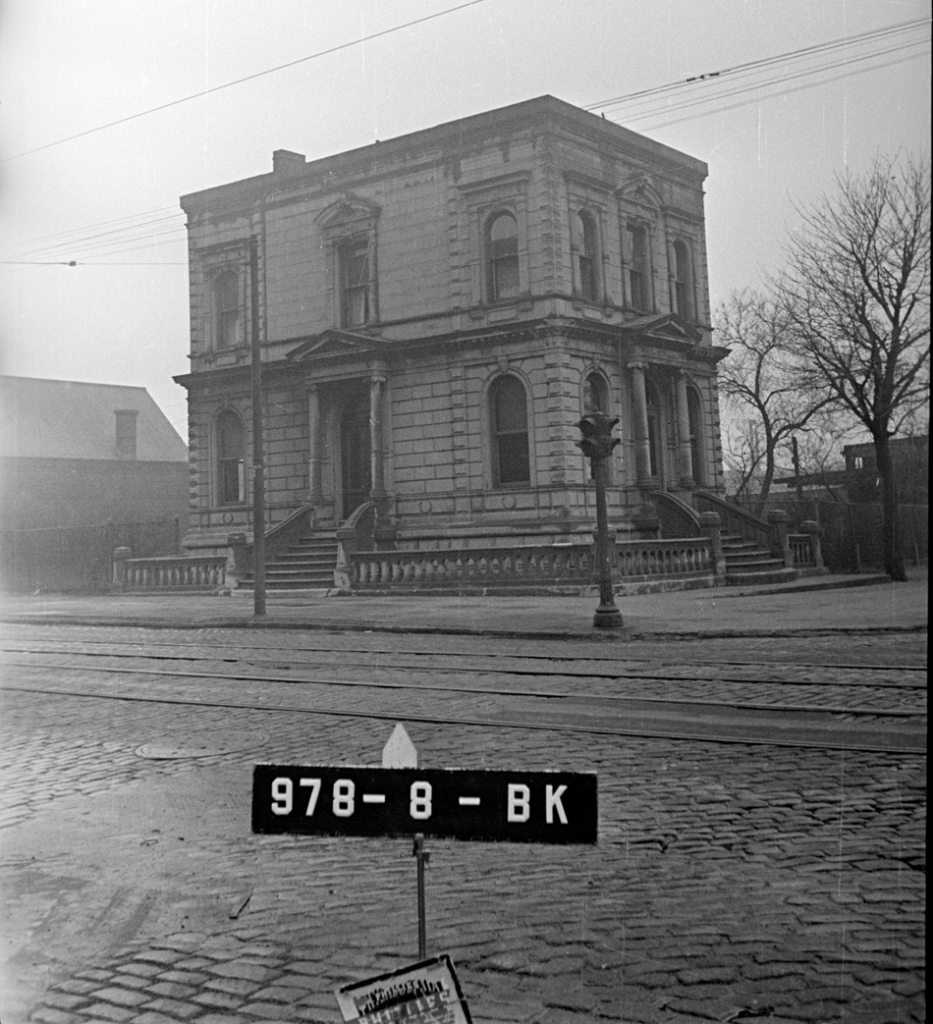
What followed was a century of slow decline. The Brooklyn Improvement Company used the building as an office until 1957. A series of small businesses came and went.
At some point in the 1960s, someone covered the original concrete facade with a brick veneer, obscuring the very material the building had been built to showcase. The building sat abandoned for decades, its significance largely forgotten by the surrounding neighborhood. (NYC LPC Designation Report)
In 2005, Whole Foods Market purchased the surrounding industrial property for a new grocery store, creating a redevelopment plan that would replace much of the former Coignet factory complex.
As part of the agreement allowing the project to move forward, the company committed to restoring the historic building, although the process became controversial as preservationists raised concerns about the building’s condition, its reduced landmark boundary, and its relationship to the much larger store built around it.
The NYC Landmarks Preservation Commission designated the Coignet Building a city landmark in 2006, but restoration did not begin until 2014. After years of deterioration, including the later brick veneer that had obscured the original cast-stone facade, the restoration removed the covering, repaired damaged concrete elements, and returned the exterior to a much closer approximation of its 19th-century appearance.
The result was a preservation compromise. The same development that erased almost all traces of the original five-acre industrial complex also helped ensure that its most important surviving piece remained standing.
The contrast between the tiny restored Italianate showroom and the sprawling modern Whole Foods that surrounds it striking, and it captures the complicated relationship between historic preservation and urban redevelopment.
Sources:
- NYC Landmarks Preservation Commission, Coignet Stone Company Building Designation Report, 2006 — https://s-media.nyc.gov/agencies/lpc/lp/2202.pdf
- Gothamist, “Brooklyn’s Historic Coignet Building Is Finally Restored,” May 2016 — https://gothamist.com/arts-entertainment/brooklyns-historic-coignet-building-is-finally-restored
- Brownstoner, “The Remarkable History of Gowanus’ Coignet Stone Building,” August 2019 — https://www.brownstoner.com/history/coignet-building-brooklyn-restoration-gowanus-360-3rd-avenue-timeline/
- Untapped New York, “The Building, a Showcase for Concrete in Brooklyn” — https://untappedcities.com/2021/03/31/coignet-building-brooklyn/
- NYC Municipal Archives, 1940s Tax Photograph Collection (1939-41 photo of building) — https://1940s.nyc