Denver’s Union Station: Burned, Rebuilt, and Reborn as Downtown’s Front Door
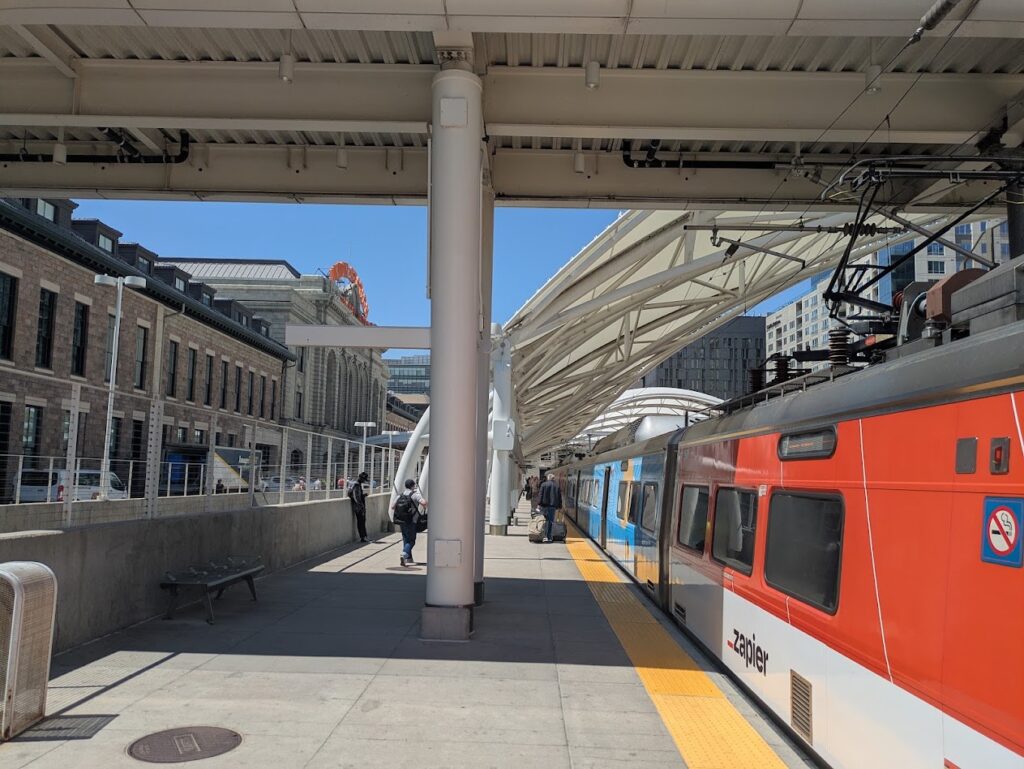
My recent work trip to Denver got off to a positive start when I made the fortunate decision of forgoing a rather expensive Uber from the airport to my hotel downtown and instead taking the light rail. It was a pleasant ride of about 25 minutes, and allowed my first impression of the city to be the one that has greeted travelers for over a century: Denver’s Union Station. I took the pictures you see below and dug into the history of this wonderful landmark.
Denver Union Station’s 1881 Origins and 1894 Fire
Over its long history, Denver’s Union Station has burned down, been rebuilt twice, and spent decades in decline before becoming one of the city’s major destinations once again.
Denver Union Depot opened on June 1, 1881, built to consolidate the tangle of separate railroad stations scattered across the city.
At 500 feet long with a 128-foot central tower, it was the largest building west of the Mississippi River at the time, constructed of pink rhyolite stone with sandstone trim around the doors and windows.
The station stood for less than three years before a fire on March 18, 1894, destroyed its central hall and clock tower.
The building was quickly rebuilt in a similar Romanesque style, but within two decades, growing passenger rail traffic had outgrown even the rebuilt structure.
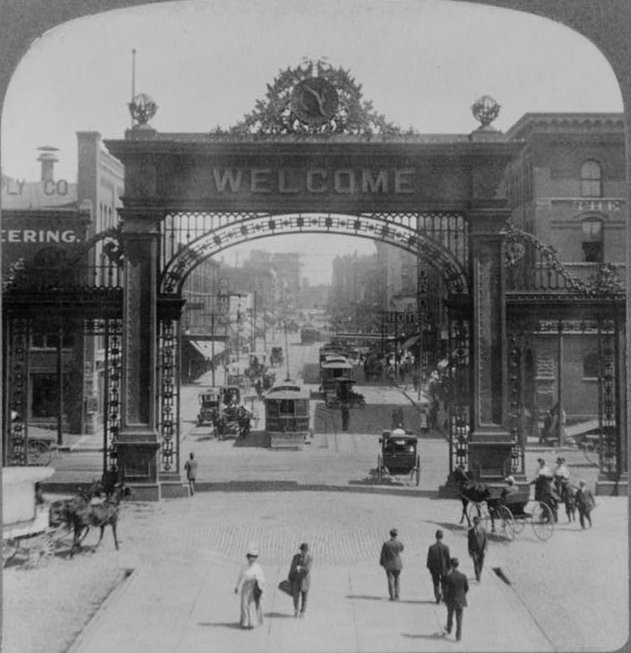
In 1906, Mayor Robert Speer dedicated a 65-foot Welcome Arch in front of the station, lit with over 2,000 bulbs and inscribed to serve as the city’s own front door for arriving visitors.
Gove & Walsh’s 1914 Beaux-Arts Rebuild
https://www.newspapers.com/article/denver-labor-bulletin/202943516/
Article from Sep 2, 1916 Denver Labor Bulletin (Denver, Colorado)
In 1912, the railroads operating out of the station reorganized as the Denver Union Terminal Railway Company and decided to demolish and rebuild the central portion again, this time in a grander style meant to reflect the city’s growing ambitions.
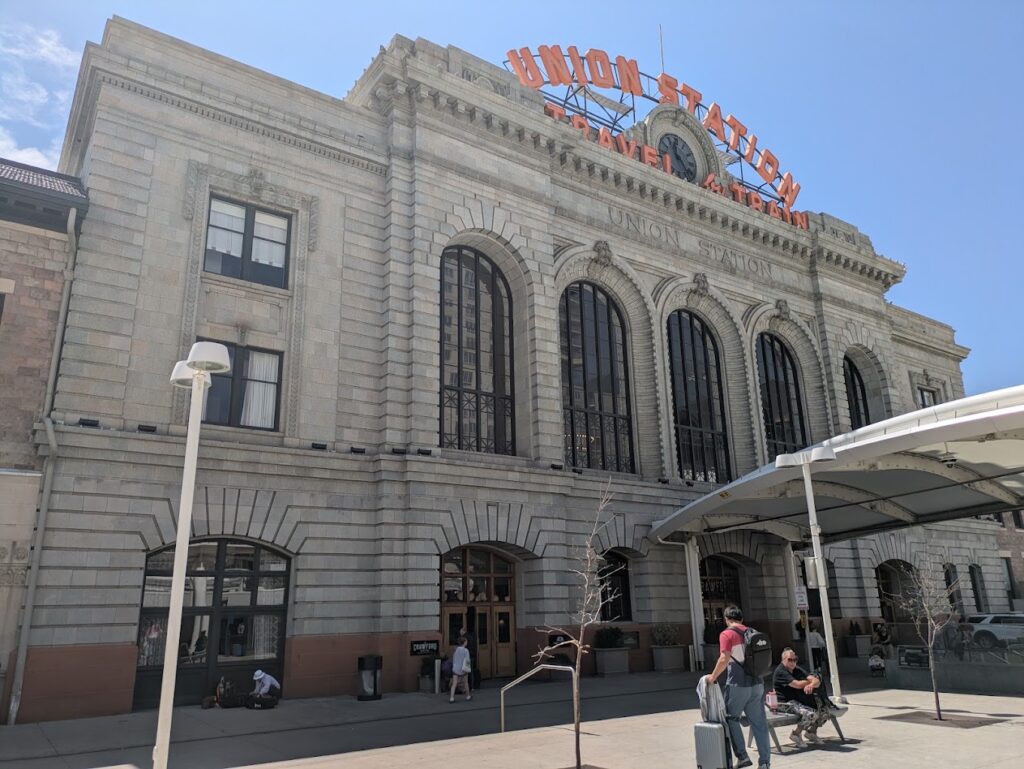
Local architects Aaron Gove and Thomas F. Walsh designed the new central hall in the Beaux-Arts style, clad in carved Colorado granite, and it opened in 1914.
The same firm designed several other buildings nearby along the same rail corridor, including the C.S. Morey Mercantile Building and the Barteldes Seed Building, both a few blocks away on 16th Street.
Denver’s Viaduct Network and the Doors That Led to Nowhere
For most of the 20th century, elevated viaducts ran through the heart of downtown Denver, connecting warehouses and commercial buildings directly to the rail yards around Union Station so that freight could move without competing with street traffic below.
A federal engineering survey documented the 20th Street Viaduct, the longest in the system at 85 spans, built in 1911 to carry traffic over both the South Platte River and Denver’s sprawling rail yards below.
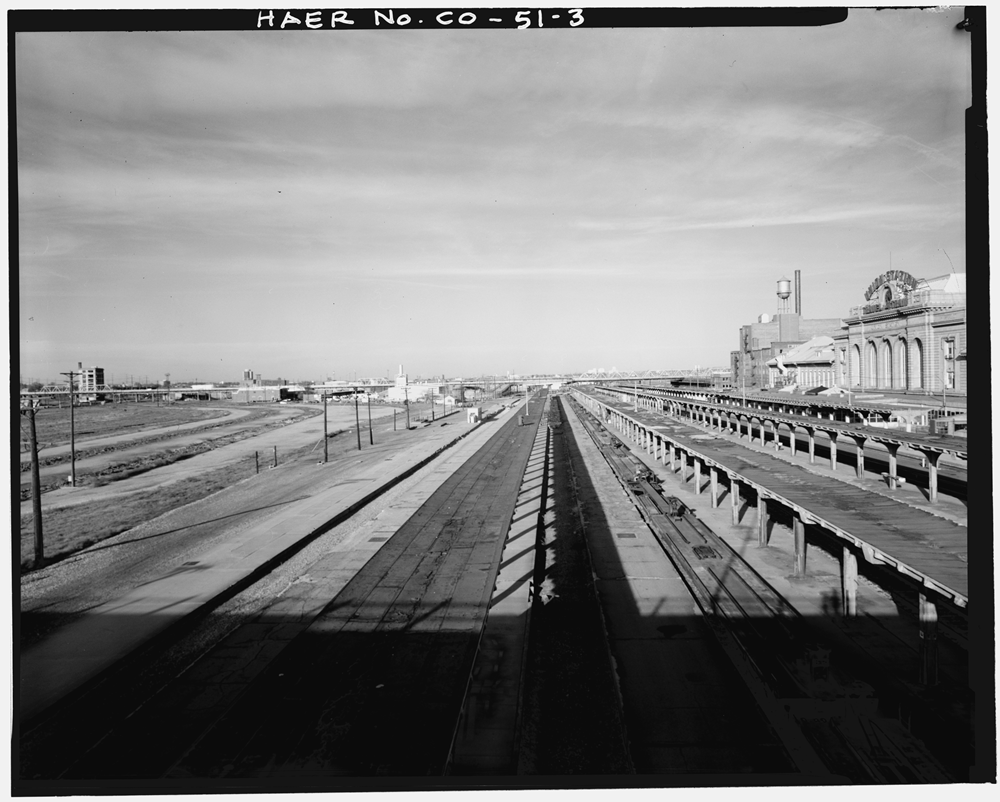
The viaducts cast a permanent shadow over the streets they crossed, and businesses along their path built upper-floor doors that opened directly onto the roadways for loading and unloading.
The city removed the viaducts in 1994. The buildings, and their doors, mostly stayed. Today, the Tattered Cover bookstore (seen in the image below), housed in the former Morey Mercantile Building a few blocks from the station, still has a second-floor door that opens onto nothing but open air and a safety railing. The Barteldes Seed Building across the street has a matching one.
Denver Union Station’s Decline and 21st-Century Revival
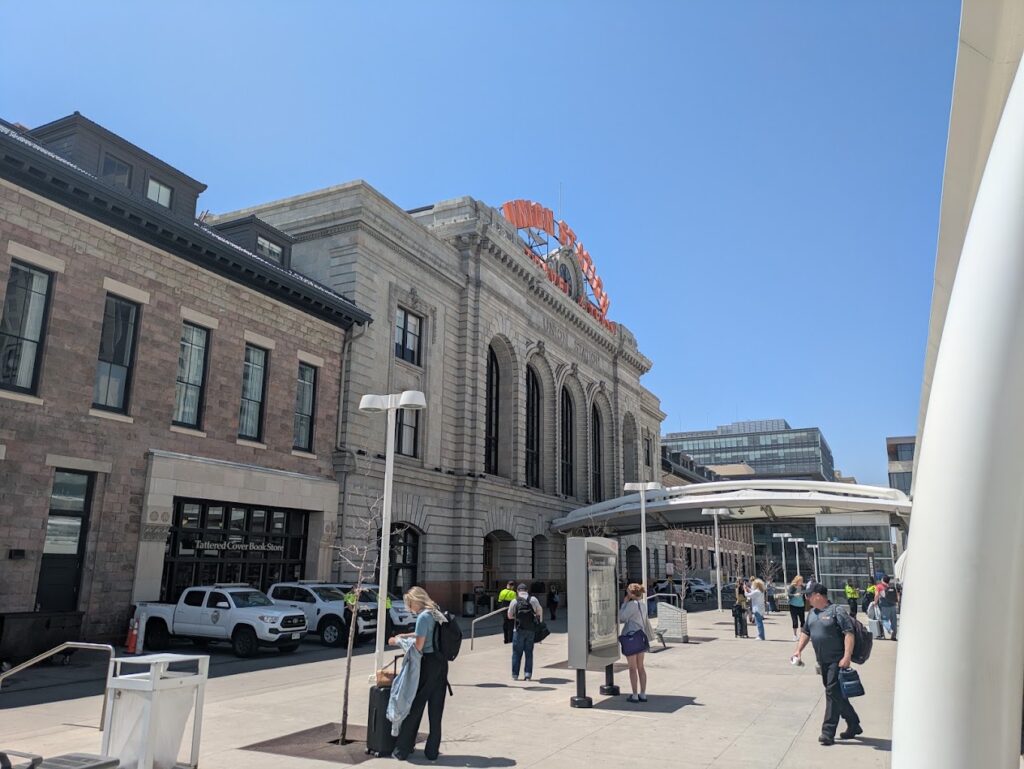
Union Station reached its peak in the mid-1940s, when as many as 50,000 people passed through daily during the height of wartime rail travel.
Passenger rail use declined steadily after World War II, and the station spent much of the late 20th century underused. Beginning in 2001, a group of investors that included preservationist Dana Crawford, the same figure behind the rescue of Larimer Square a few blocks away, formed the Union Station Alliance and invested more than $54 million into revitalizing the building.
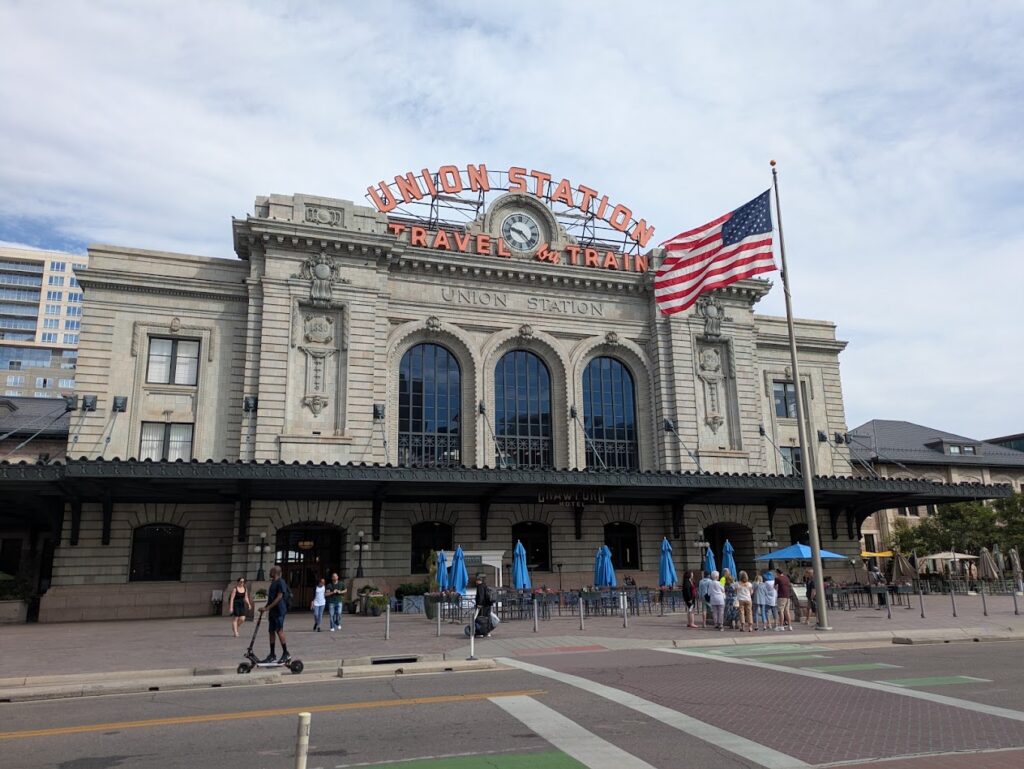
The station reopened in 2014, exactly one hundred years after Gove and Walsh’s central hall first opened, now home to the Crawford Hotel, restaurants, and shops, alongside its continued function as an active transit hub.
Next to read: For the story of another historic train station that was saved and is now entering its own phase of redevelopment, read our article on Buffalo Central Terminal.