
Klinger Lake History: A Lost Chicago Resort Era
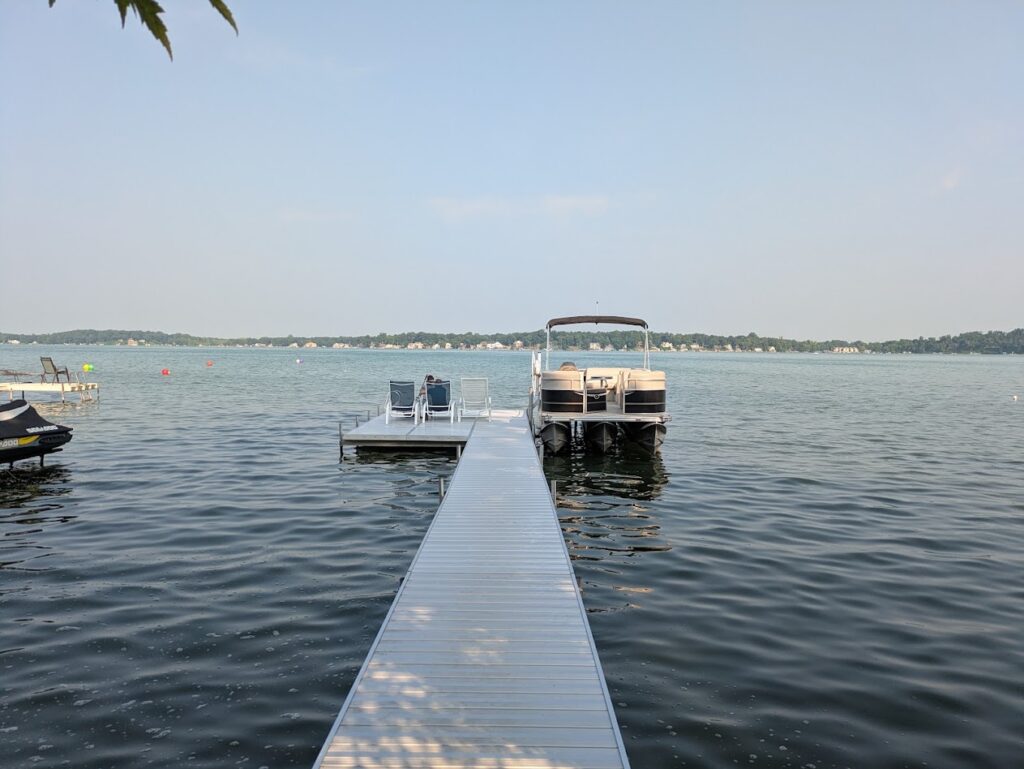
A medium-sized lake in South-Central Michigan near the Indiana border might not appear to have a compelling urban story.
My own foray into the history of Klinger Lake in Sturgis, Michigan began simply because my family has been renting a house there for a lake vacation the past few summers.
Specifically, it was a Klinger Lake history book conveniently placed on the coffee table in the home’s screened-in porch. And as I looked into the story, I was fascinated to learn that Klinger Lake was not only enjoyed by those in the area, but was also an old resort destination that attracted many a visitor from Chicago and other cities on the train route that passed through it. Some of those visitors would come back year after year, purchase their own lakefront cottages, and begin a multi-generational love affair with the lake.
How the Railroad Turned Klinger Lake into a Chicago Vacation Destination
Klinger Lake is located about 140 miles away from Chicago. The first hotel on the lake was opened by Loring George Blanchard, who came from New York state and bought 84 acres of land on the southwest side of the lake in 1844, which extended south beyond the Chicago Road which connected the lake to surrounding areas.
He also established picnic grounds and an area on the lakefront that became known as Blanchard’s Landing.
Soon after Blanchard arrived, the railroad would follow in 1851. The right of way passed through the southern part of Blanchard’s land, and the train connection truly opened the area up as a recreation destination.
As Hair explains, “travel by rail was faster, cheaper, and much more comfortable than by horse-drawn conveyance over the Chicago Road, which in those days was nothing more than a dirt trail.”
The route would become a main line for passenger and freight trains heading from Chicago to Buffalo.
Hair’s book noted that “resorters flocked to Klinger Lake from all points on the railroad and its many connections. (And) farmers in the Klinger Lake region now had the option of shipping their crops to distant markets.”
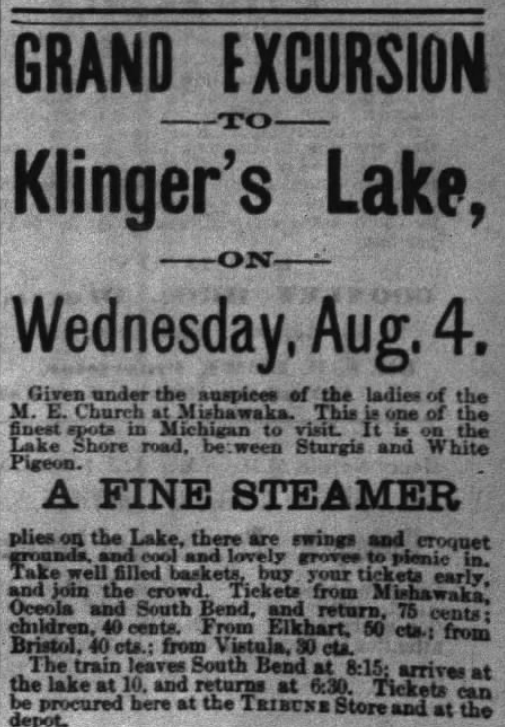
A county directory from 1880 lists Blanchard as the owner of the Klinger Lake hotel and picnic grounds, noting that he “keeps a pleasure steamer and small boats” on his property. In those years, a night’s stay at the hotel would cost you $1.50.
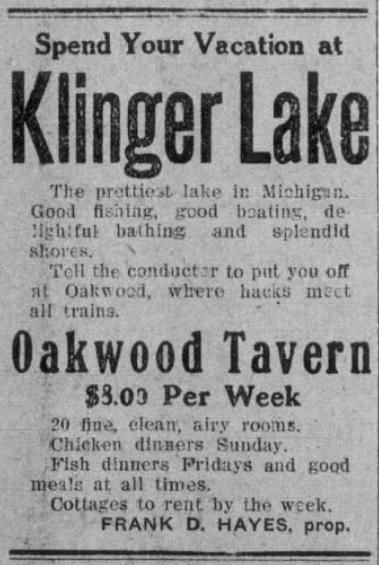
By the turn of the century, the major resort destination had shifted to the Oakwood Tavern, which was originally a farmhouse on the land of Andrew L. Weatherwax, which was converted to a small hotel by W. G. Howard who purchased the Weatherwax farm.
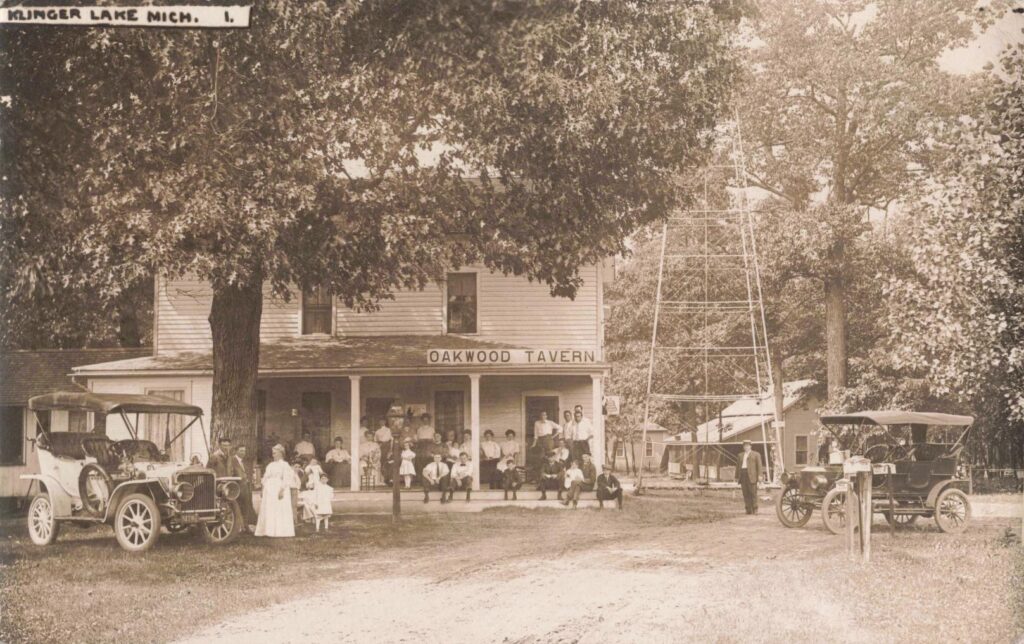
It was expanded multiple times as it grew in popularity, and would feature guest rooms, two dining rooms, a separate dance hall, tennis and shuffleboard courts, and even its own store and confectionary.
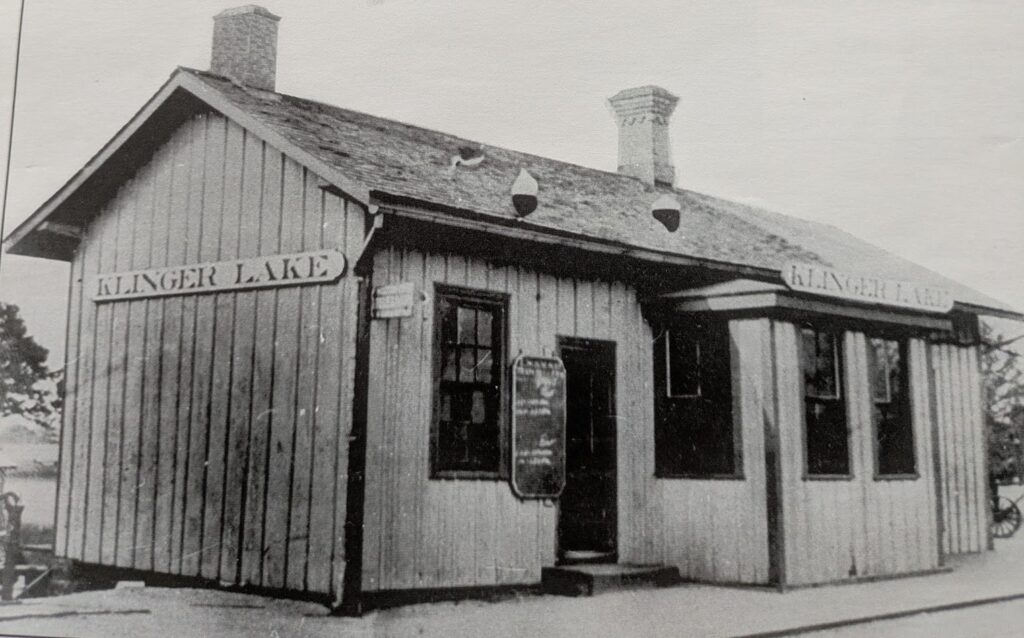
The train station came to be located in the village of Klinger, a short distance from Blanchard’s Landing. But the Oakwood Tavern was so popular that a “flag stop” (a designated spot where the train would stop anytime someone was waiting to get on or asked to get off) was established there.
The Chicago Families Who Fell in Love with Klinger Lake
A section of the book also features specific families who reflected on how special of a place the lake was to them over the years. One was John Coleman, who worked for the American Steel & Wire Co. (a unit of U.S. Steel). He lived in Chicago but traveled throughout the Midwest for work, and in Des Moines, a man to whom he had sold wire fencing convinced Coleman to rent his cottage at Klinger Lake for the summer of 1912. He enjoyed it so much that he bought it from the customer the following year for $1,000.
It was a frame house on a 100-foot lot, and in those days no one on the lake had telephone or electric service. The major amenity in the cottage was “a pot-bellied wood-burning stove in the living room” while the kitchen featured a “hand-operated water pump in a sink (and) a four-burner kerosene cook stove.” This story was included in the history book because Coleman’s son, John Coleman II, wrote a memoir shortly before he passed away in the 1990s “to explain to his grandchildren how important Klinger Lake had been to him and others in his family.”
Another Windy City family with a long love affair with the lake was the Wilson family. Around 1900 they decided “to rescue their family from the hot Chicago summer by renting a cottage” on the lake. They rented others in the same area the following years until purchasing their own in 1905, which stayed in the family into the 2000s.
Klinger Lake Today: From Wilderness Cottages to Comfortable Lakefront Living
The Klinger Lake station closed in 1942, as automobiles gave families a faster, more flexible way to reach the lake. (And in the 1920s and 30s, buses had begun to bring visitors to the lake as well.)
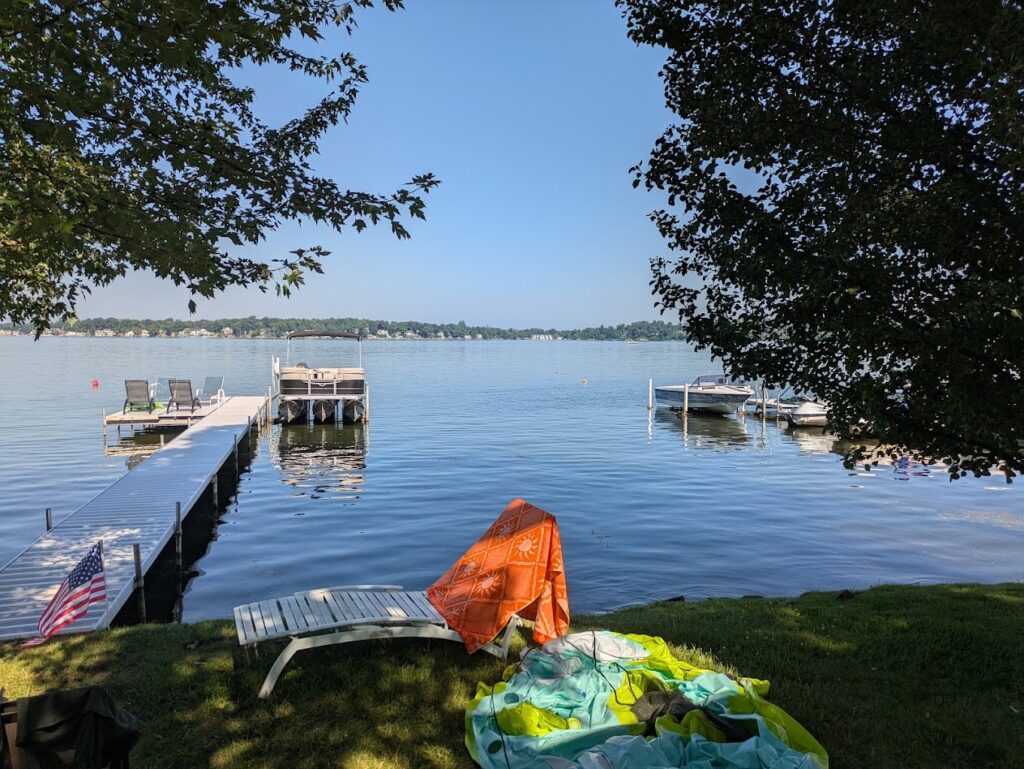
Skipping ahead to the present day, the lake has never stopped drawing people back. Although modest cabins like the Colemans’ once sat on open, wooded lots with no telephone or electric service, the shoreline today is considerably denser with year-round homes, most of them quite a bit larger than the modest frame cottages of a century ago.
It was an interesting realization for me driving to this smaller Michigan lake: for a few generations, this was a real vacation destination that people flocked to by train from the second largest city in the United States, in a way you wouldn’t be likely to guess looking at it today.
Sources
Hair, Robert E. “Klinger Lake: Its Origins and Growth,” The Klinger Lake Association, Inc, 2001.