The Winooski Block: A Lone Urban Renewal Survivor in Vermont
Stories of urban renewal across the United States often focus on our larger cities and the entire neighborhoods and downtown districts that were razed. But many smaller towns and cities also saw their historic cores radically reshaped during the 1960s and 1970s, and preservation battles in those areas took on a different type of significance due to the fact that every building represented a much larger percentage of the urban fabric.
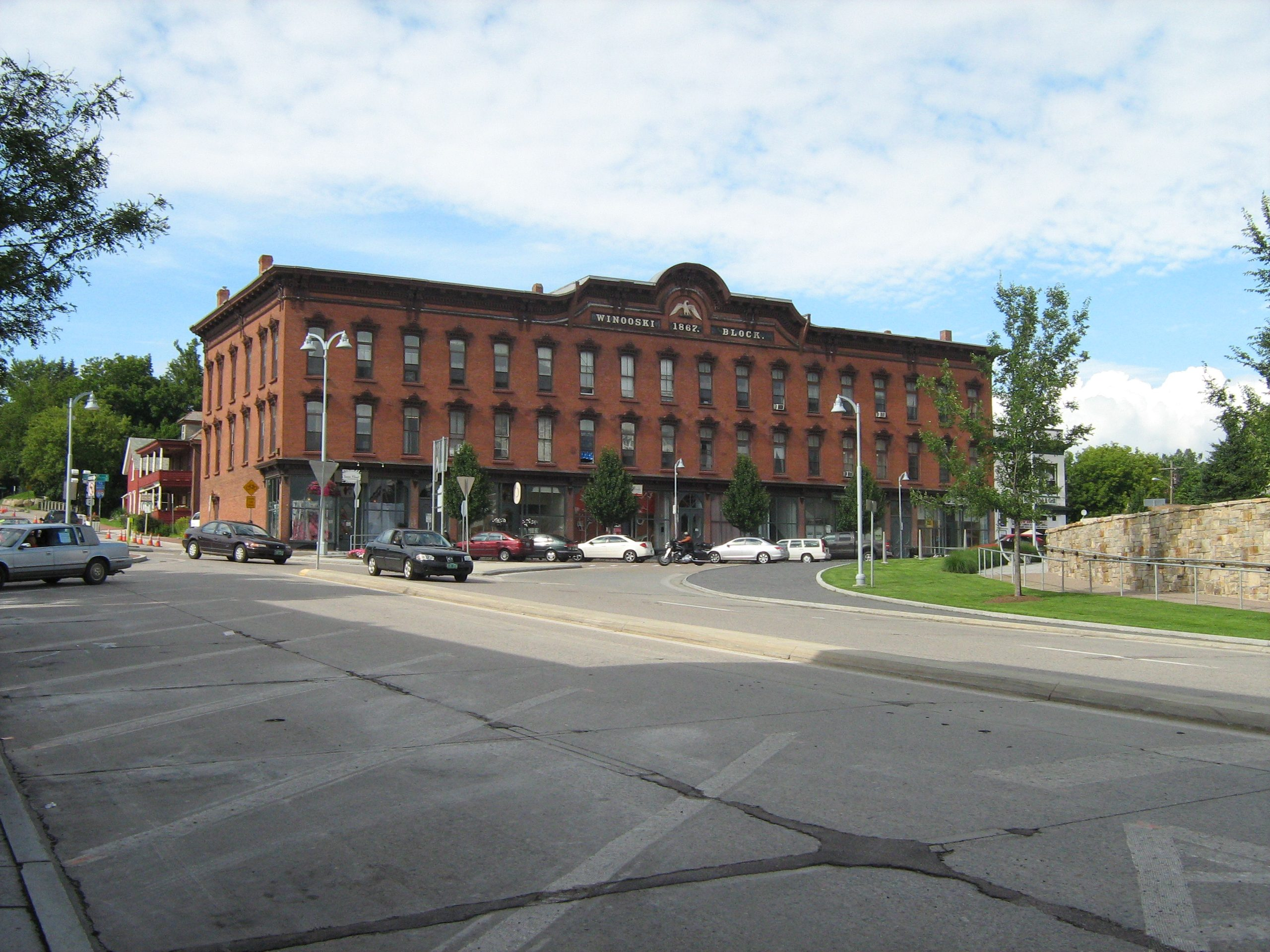
Winooski Vermont is a small city in the Burlington metropolitan area where only one substantial historic commercial building survived the city’s urban renewal efforts, and it was nearly lost as well.
But today it stands as a landmark in a downtown that was more recently reborn again for a new era.
The “Handsomest Block in Vermont”
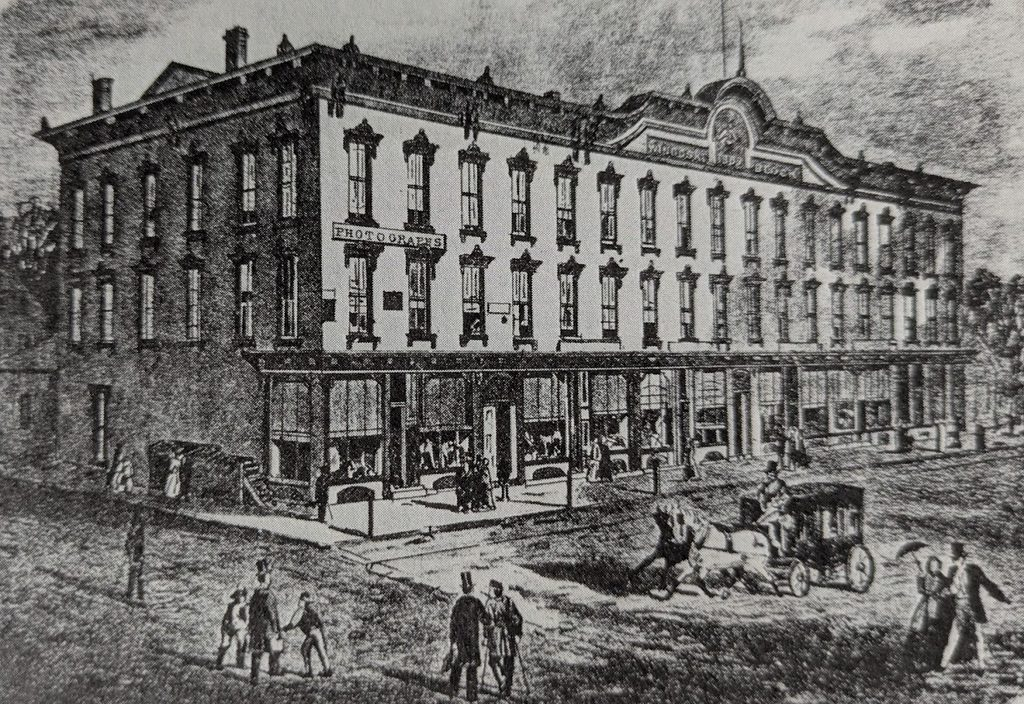
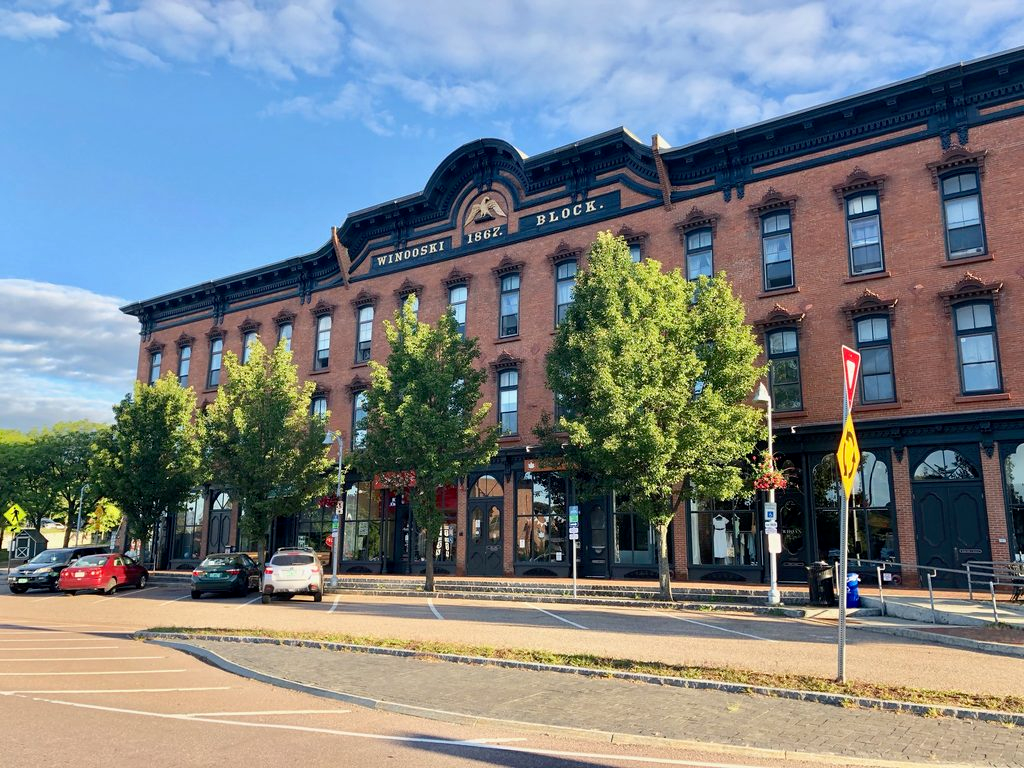
The Winooski Block was built in 1867 in the Italianate style and is “outstanding for its ornamental detail in a variety of materials.” Around the time it was built newspapers called it the “handsomest block in Vermont.”
Notable features include its bracketed wooden cornice, which curves upward near the center, under which the words “Winooski 1867 Block” appear, and right above the year is an eagle more than five feet tall which was hand carved from a single piece of wood.
Soon after its completion, the beauty and sheer size of the structure surprised at least one visitor from abroad, who according to a newspaper article asked “what could have prompted the erection of such a block as that here in Winooski. It is the best block I must confess in Vermont, but what amount of business is being done here to warrant such an outlay of capital?”
One source said the building “exemplifies the wealth and exuberance of New England mill towns at that time” (Fleming). And when it opened, the businesses operating from the 6 ground floor storefronts included LeClair & Son’s dry goods and clothing store; Mr. Henry E. Brown’s grocery store; Charles Lafountain’s dry goods and clothing store, and W. L. Greenleaf’s drug store. The second and third floors had a variety of uses including the law offices of Messrs. Peter Leclair and A. C. Ballard.
But a century after it opened, the sense of awe towards the building had long since faded, and city planners wanted to demolish it for an urban renewal project.
However, as explained by Vermont History, it was saved by Russell Niquette Jr., the son of the building’s owner, who utilized federal historic preservation grant funding.
The book Facade Stories by Ronald Lee Fleming describes the project that involved both restoration and renovation.
By the 1970s, the building’s appearance had faded along with the town’s fortunes, as “shabby storefront renovations cloaked the elegant ground floor details, and the upper two stories were broken up into a warren of shabby apartments.”
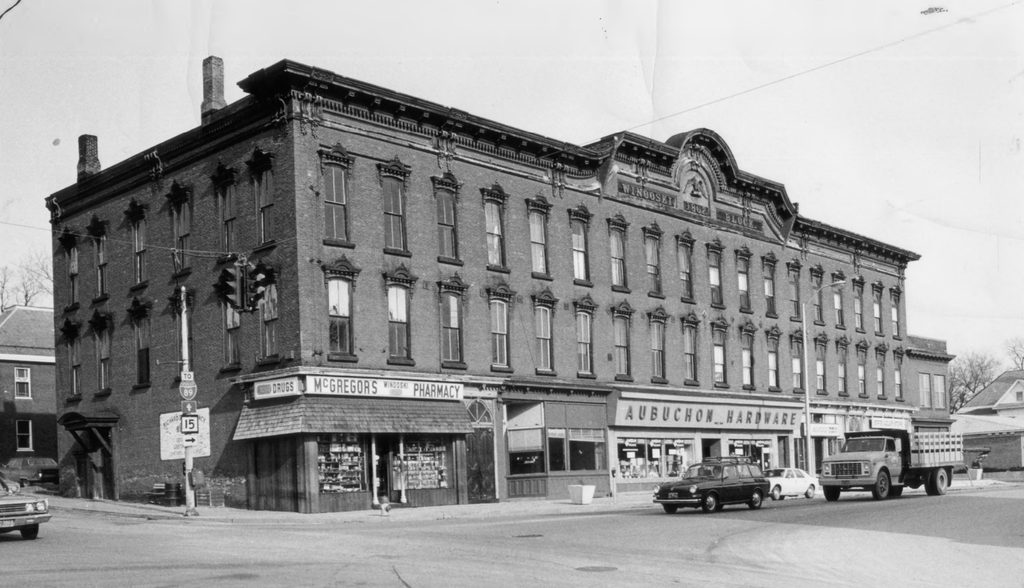
The $140,000 project involved Mark Tigan of the Winooski Community Development Corporation, architect Martin Tierney, and Moose Creek Restoration. It consisted of “cleaning and restoration of the paint, brickwork, and cast iron detailing on the upper stories; and restoration of the original storefronts.”
A 2011 article cites the building as an important example of how Winooski remade its downtown, transitioning “from a fading mill town full of retirees to an up-and-coming, youthful little city” (Burlington Free Press).
It continued that the “venerable block looks the same as it always has, except for the funky new businesses on the ground floor.”
Sources
“Winooski Items,” The Burlington Weekly Sentinel, Apr 03, 1868
“Improvements at Winooski,” Burlington Times, Aug 01, 1868
“Old city learns new tricks”, The Burlington Free Press, Aug 29, 2011
Fleming, Ronald Lee. Facade Stories: Changing Faces of Main Street Storefronts and How to Care for Them. 1982.
National Register of Historic Places Nomination Form