An NYC Skyscraper Buckled, Revealing Risks of Office-to-Housing Conversion Boom
On the morning of July 7, 2026, two steel support columns on the 21st floor of a Midtown Manhattan office tower began to buckle. Several floors sagged. Bricks fell to the sidewalk.
The fire department evacuated the building and nine others around it, closed traffic on East 42nd Street, and Mayor Zohran Mamdani stood in front of cameras calling it an “extremely dangerous situation” (CNN).
Despite some initial concern, the building didn’t collapse. It was stabilized within a day, and its developer has committed to rebuilding the damaged section.
The tower was 235 East 42nd Street, the former world headquarters of Pfizer, and it was in the middle of becoming the largest office-to-residential conversion in New York City history.
And the incident has raised some larger questions about this real estate trend that cities across the country are relying on to solve two problems at once: too many empty office buildings, and not enough housing.
What Happened at 235 East 42nd Street
The former Pfizer headquarters is actually two connected buildings, 219 and 235 East 42nd Street, located one block from Grand Central Terminal.
In 2024, developer MetroLoft, led by Nathan Berman, began converting the complex into 1,600 apartments. The project would add 19 new stories on top of the shorter 219 East 42nd Street building while “reconfiguring and recladding” the taller tower next door (Gensler).
On the morning of the incident, FDNY officials discovered two buckling support columns on the 21st floor and several sagging floors on the upper levels.
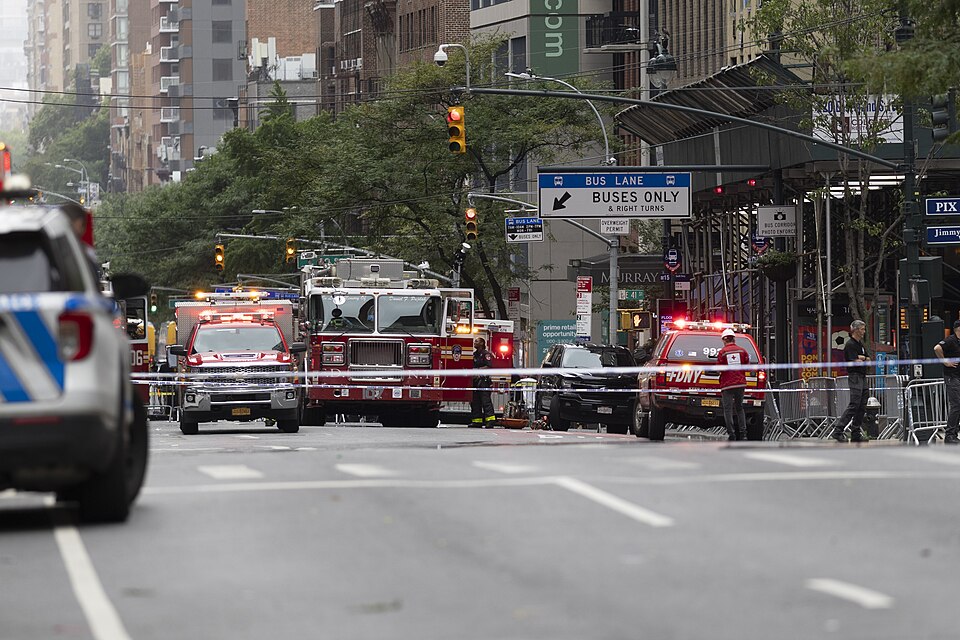
Crews worked through the night installing temporary shoring and steel reinforcement, and by the next morning the structure had been stabilized.
The cause of the buckling appears to be a relatively simple one: the added weight of the widening of floors 23 and 32, just above the two columns that failed.
Berman told reporters the columns “collapse[d]” under that additional load” and that they may not have been sufficiently reinforced. He also pushed back on characterizations of the incident as more severe than it was (CNN).
A Brief History of the Pfizer Building
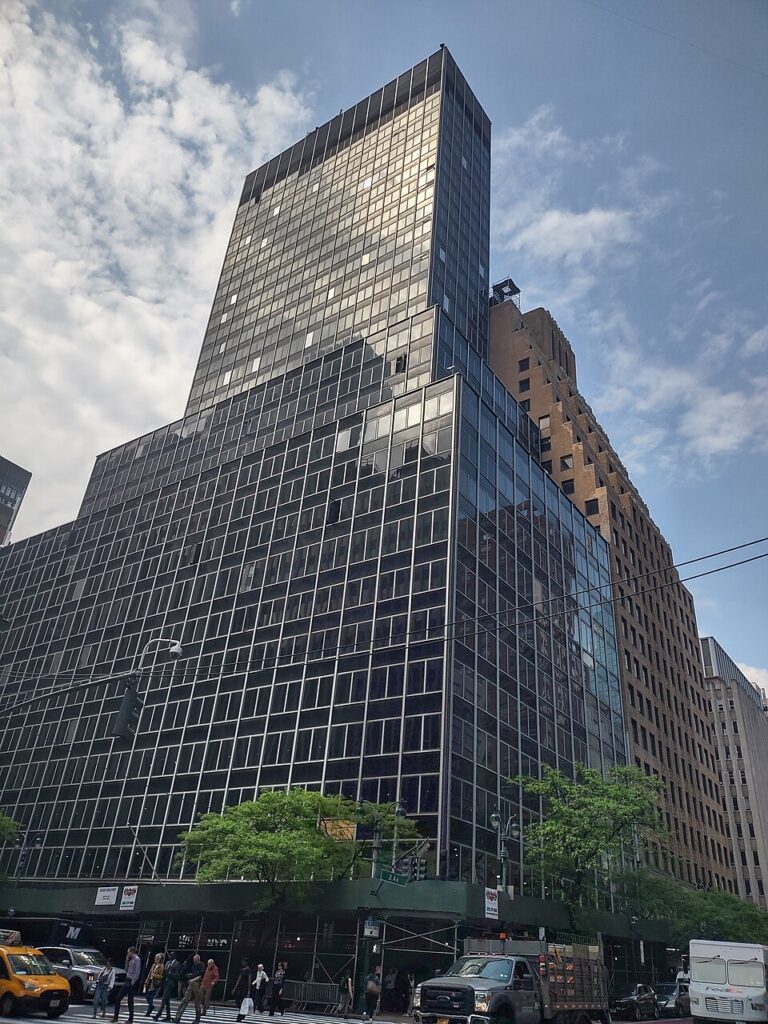
235 East 42nd Street was designed by Emery Roth & Sons in the International Style, with groundbreaking on June 4, 1959. Pfizer moved into the finished 33-story tower in April 1961, initially occupying 18 of its floors with about 1,000 employees.
The building’s interior also featured an unusual piece of art: a large mural titled “Medical Research Through the Ages” by artist Nikos Bel-Jon, made of tin and aluminum panels depicting prominent medical figures through history including Hippocrates, Alexander Fleming, and Louis Pasteur.
Next door, the 10-story 219 East 42nd Street is the older of the two buildings, completed in 1905. Pfizer began outgrowing the combined complex in the early 2000s, acquiring a nearby building at 685 Third Avenue in 2003 and leasing space in several other buildings around the area as its space needs grew.
But a couple of decades later, the office market had changed considerably.
The Post-Pandemic Office-to-Housing Boom
Nathan Berman’s MetroLoft company has been repurposing aging office buildings into housing since the 1990s. One early project converted the Financial District’s 1920s-era Tyler Building into 111 apartments, and from there the projects kept growing.
The trend has exploded in popularity since 2020 as remote and hybrid work emptied offices during the pandemic and never fully filled them back up.
The national office vacancy rate stood at 17.7 percent as of June 2026, and Manhattan buildings slated for conversion have sold at roughly 45 percent below pre-pandemic prices (Propmodo; Commercial Property Executive).
Cheap buildings and a serious housing shortage have made office-to-residential conversion one of the defining real estate trends of the decade, with about 90 projects underway in New York City alone and similar activity growing all over the country.
These conversions also have a broader impact on downtown vibrancy across the pattern, as they chip away at the longstanding separation of office and residential uses, bringing more round-the-clock activity to blocks that once emptied out at 6 p.m.
Why Office Buildings Are So Hard to Turn Into Apartments
Converting an office tower into housing might sound like an easy win, but the two building types were designed around opposite goals, which makes the redevelopment projects complicated.
Open floor space in office buildings often stretches 30 feet or more from any window, which fails residential code requirements for direct natural light in bedrooms and living areas. One or two restrooms are also typically sufficient for a large number of people, while every apartment needs its own kitchen and bathroom, meaning plumbing has to be rerouted throughout the entire structure (REMI Network). And most office towers were built around a single central stairwell, while residential code generally requires two (Up For Growth).
None of this makes conversion impossible, of course, and hundreds of projects have pulled it off since 2020. But developers are constantly negotiating tradeoffs between a building’s existing bones and what residential code requires, and building higher can be one option to overcome some of the challenges. Projects that add substantial new floor area on top of an existing building, however, like the Pfizer, create bigger structural questions than more straightforward interior conversions.
Where the Pfizer Conversion Stands Now
As of this writing, Berman has publicly committed to rebuilding the affected floors, telling reporters the damaged section will be “reskinned” and reinforced with entirely new steel and facade material (Commercial Observer). The project faces financial pressure in addition to the structural issue, as the $720 million construction loan, financed by Madison Realty Capital, continues accruing interest during the pause.
The incident has also put city officials in a challenging spot as Manhattan’s apartment vacancy rate sits below 2 percent. That leaves regulators weighing new scrutiny of complex, heavily engineered office-to-residential conversions like this one against the risk of slowing a program the city is depending on for badly-needed housing.
Whether the Pfizer Building’s issues have any discernable impact on the broader market remains to be seen, but it is clear that the industry is watching it carefully, and incorporating the questions it raises into their future conversion plans.
Sources
CNN, “Manhattan high-rise at risk of partial collapse,” July 7, 2026
NBC New York, “Manhattan high-rise, former Pfizer building, unstable due to buckling beams”
Newsweek, “Fears Over NYC Skyscraper Collapse as Historic Ex-Pfizer HQ Buckles”
Commercial Observer, “Metro Loft, David Werner to Rebuild Collapsed Portion of Former Pfizer HQ”
The Real Deal, “Can MetroLoft’s Pfizer Building Conversion Make A Profit?”
Gensler, “MetroLoft 219-235 East 42nd Street Conversion”
Propmodo, “The Great Office Conversion is Just Getting Started”
Commercial Property Executive, “Office Discounts Create Conversion Opportunities”
Enterprise Community Partners, “What Will it Take to Convert Offices to Housing?”
Strong Towns, “5 Reasons Why Office-to-Residential Conversions Are a Serious Challenge”